
Artisan Plumbing · St. George & Washington County
Plumbing for HOAs & Community Associations
Shared infrastructure. Community amenities. Professional execution.
A planned community is more than its homes. Clubhouses, pools, spas, fountains, landscaped entrances, recreation areas, and maintenance facilities all depend on water, drainage, and mechanical infrastructure. When those systems need attention, boards and community managers must protect the property, manage access, and keep residents informed.
Artisan Plumbing supports homeowners associations, condominium associations, gated neighborhoods, and master-planned communities throughout St. George and Washington County. From plumbing service and preventive maintenance to amenity renovations and shared utility repairs, we bring experience coordinating work in active community facilities. For projects extending underground, Artisan Group provides in-house excavation capability.
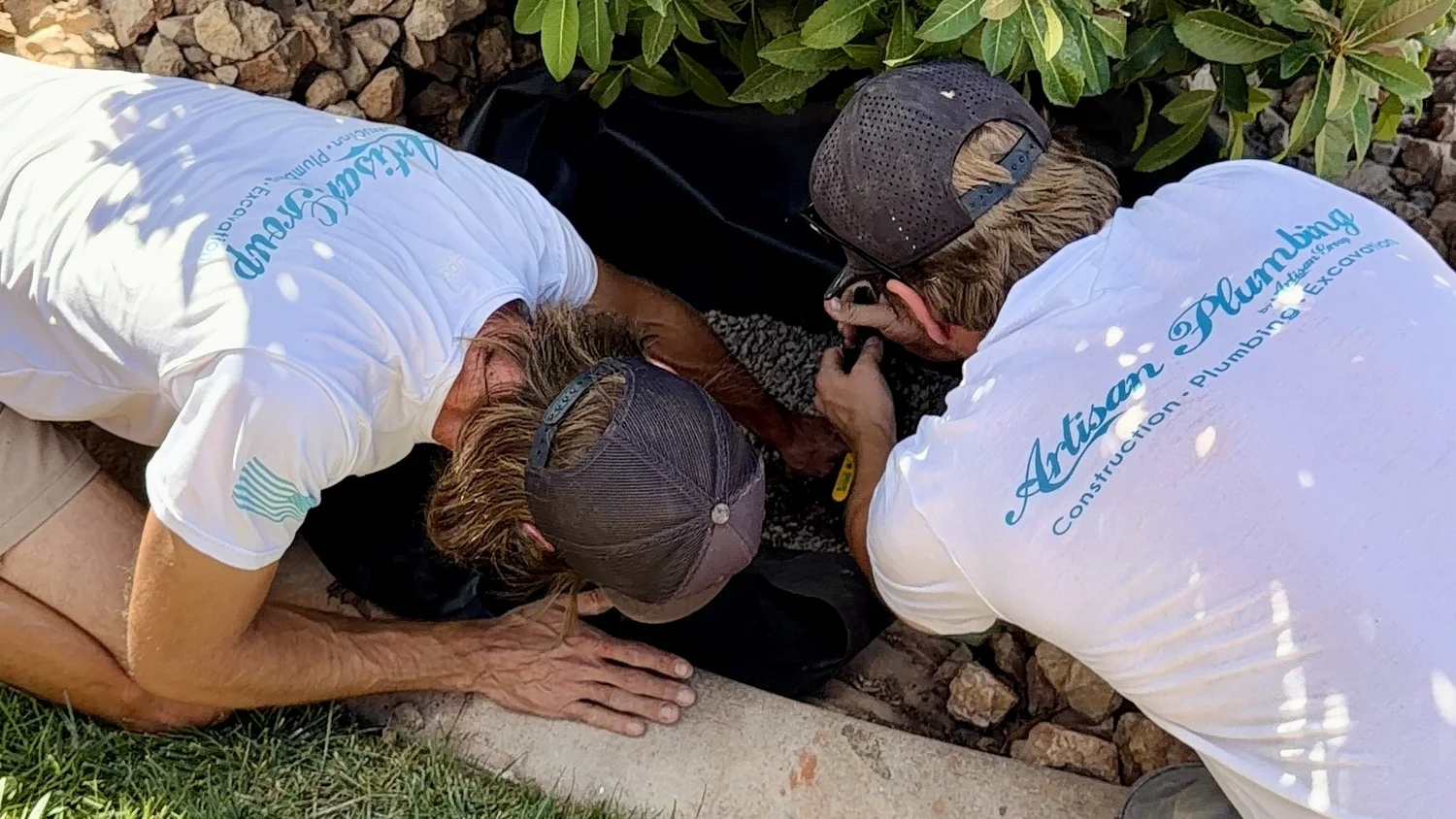
Different community structures
One plumbing contractor. Different responsibilities.
The plumbing needs of a condominium association can be very different from those of an HOA overseeing a neighborhood of detached homes.
We begin with the property's physical systems and the association's defined scope, rather than assuming every community operates the same way.
HOA boards & association officers
Boards need enough technical information to evaluate a repair, compare reasonable options, and understand how a decision may affect future maintenance. We explain findings and scope in terms that support responsible decisions without stepping into the board's authority.
Community association managers
Managers balance vendor scheduling, homeowner questions, access, budgets, and board directions. We coordinate with the association's designated contact, respect its approval process, and provide clear information about the plumbing work.
Condominiums & townhome associations
Shared water risers, supply branches, drain and waste stacks, concealed piping, and common shutoffs can make even a localized leak a building-wide concern. Diagnosis needs to consider the interconnected system and the implications of entering occupied units.
Gated & master-planned communities
In amenity-rich neighborhoods, the work can move from a clubhouse restroom to a pool-equipment space, entry fountain, landscape water main, or buried utility beneath a private drive. We understand the different access, operating schedules, and contractor relationships involved in maintaining these shared places.
Clubhouses, pools & common amenities
The places residents share deserve dependable systems behind them.
A clubhouse opening, a busy summer at the pool, or a fountain welcoming residents at the entrance depends on infrastructure that is easy to overlook until it stops working.
Artisan Plumbing and Artisan Group understand the practical demands of maintaining and improving amenity-rich communities. We can service, repair, maintain, and renovate the plumbing and related site infrastructure serving shared facilities, while coordinating approved scopes with community managers, pool operators, landscape contractors, and other specialists. That means examining not only the failed component, but how work affects the surrounding facility and the people using it.
01 / Community buildings
Clubhouses & recreation centers
Restrooms, showers, locker rooms, kitchens, wet bars, drinking fountains, water heaters, hot-water distribution, service sinks, and laundry connections. We handle repairs, fixture replacements, piping improvements, and the plumbing portion of clubhouse refreshes or larger renovations, with work planned around events, access, and building use.
02 / Aquatic facilities
Community pools, spas & pool houses
Water supply and makeup lines, shutoffs, backflow protection, plumbing serving pool-equipment areas, approved drain connections, showers, changing rooms, and adjacent restroom facilities. We help diagnose leaks and replace or modify applicable piping and valves during service, equipment updates, or pool-area renovations. Work involving the pool vessel, circulation design, sanitation, and regulated operation is coordinated with qualified pool specialists and the approved project team.
03 / Decorative water
Fountains, waterfalls & water features
Entry fountains, recirculating decorative features, and landscaped water displays can include buried feeds, makeup water, accessible pumps, isolation valves, return piping, overflow provisions, and drains. We can investigate water loss or pressure issues and service, repair, or renovate the associated piping and water infrastructure within the agreed scope. In Southern Utah, mineral buildup and exposure also matter when planning materials and access for future maintenance.
04 / Shared landscape water
Landscape supply & common grounds
Community irrigation feeds, mainlines, pressure reducing valves, isolation points, backflow assemblies, and buried distribution piping are often connected to a larger water-management picture. We work on the plumbing and underground supply side and coordinate with existing irrigation or landscape teams on controllers, planting, sprinkler coverage, and finished landscape restoration.
05 / Outdoor gathering spaces
Pavilions, outdoor kitchens & recreation areas
Community gathering areas may have barbecue gas supplies, sinks, drinking stations, drinking fountains, restrooms, washdown connections, or other utilities that need reliable service. We can handle defined plumbing and gas-piping improvements, underground utility adjustments, and repairs as these spaces are maintained, updated, or reconfigured.
06 / Working facilities
Maintenance buildings & support spaces
Service yards, equipment rooms, common-area restrooms, janitorial spaces, dog-wash stations, and staff facilities need accessible valves, functional drains, reliable hot water, and practical connections for ongoing use. We can address maintenance needs and plumbing modifications without treating these spaces as an afterthought.
The right division of work: Artisan Plumbing handles defined plumbing, water, gas-piping, drainage, and associated infrastructure scopes. Artisan Group can coordinate related excavation and site work. Pool water chemistry, public-pool operation, lifeguarding, landscape horticulture, and specialty electrical or aquatic work remain with the appropriately qualified parties. We can collaborate with those vendors as part of a coordinated community project.
Service, maintenance & renovation
Support for the full life of a shared facility.
The need may be one urgent repair, scheduled attention to vulnerable plumbing, or an improvement the board has been planning for years.
We work with the association's actual priorities and operating schedule. A facility does not have to be closed for a major renovation to benefit from smaller, well-timed changes that make its systems safer to isolate, easier to maintain, or better suited to the way residents use it today.
Responsive service & troubleshooting
Investigate active leaks, failed valves, drainage problems, interrupted hot water, loss of pressure, and unexpected water use in shared buildings or amenity areas. Determine what can be addressed immediately and what needs a separately approved repair plan.
Planned plumbing maintenance
Discuss recurring checks of accessible piping, isolation valves, pressure regulation, backflow testing requirements, fixture condition, and other agreed components. Planned work can be aligned with seasonal facility use and the association's existing maintenance schedule.
Renovations & modernization
Support clubhouse remodeling, restroom and shower improvements, piping reconfiguration, water heater replacements, fountain line improvements, amenity equipment connections, and underground utility adjustments. Projects are scoped around the approved design, applicable trades, and any required permits or reviews.
Coordinated work across the property
Plan utility isolation, restricted-area access, excavation around established landscaping, sequencing with pool or landscape contractors, and restoration of service. The board or manager retains direction and relationships with its chosen vendors; Artisan works within its authorized scope.
A practical example
When one issue reaches beyond one amenity.
Consider an entry fountain that begins losing water, a nearby landscape area that remains wet, and unusually high usage on a common-area meter. It could be a fountain feed, an irrigation line, a valve problem, or a buried pipe serving another facility. Replacing the first visible part without understanding the connections may not solve it.
Our approach starts with available plans, meters, shutoffs, accessible components, and the observed symptoms. Where excavation is needed, the plumbing and access plan can be developed together. The result is a defined scope the association can evaluate, rather than assumptions about where the water is going.
Questions worth asking before amenity work begins
- Which facilities share a meter, supply line, drain, or equipment area?
- Can the affected system be isolated without closing unrelated amenities?
- Who operates the pool, fountain, or irrigation equipment day to day?
- Are resident events, seasonal openings, or access restrictions scheduled?
- Does the association want a defined repair, a condition assessment, or a phased improvement?
Technical services for community property
The shared systems behind a well-run community.
The most consequential plumbing components are often out of sight: behind walls, inside utility rooms, beneath landscaping, or under private drives.
Artisan Plumbing evaluates the systems involved and recommends repairs based on actual conditions, access, service requirements, and the property's long-term needs.
Water supply & isolation
Common water service lines, underground distribution, shutoff valves, supply manifolds, pressure complaints, and leaks affecting more than one home or common facility.
Shared drainage & sewer
Common building drains, waste stacks, sewer laterals, underground lines, recurring backups, camera inspections, and sewage pump or lift-station concerns where applicable.
Backflow prevention
Utah-certified testing, repair, installation, and replacement of backflow assemblies associated with irrigation and other applicable water connections, including the valves and adjacent plumbing.
Pressure regulation
Pressure reducing valves, unstable pressure, worn valves, and the difference between domestic plumbing pressure and a community's irrigation supply requirements.
Clubhouses & amenity infrastructure
Restroom and kitchen fixtures, showers, hot water, supply and drain piping, water-feature connections, and plumbing associated with pool houses or community support buildings. Planned maintenance and renovations can be coordinated around facility operations.
Repairs, replacements & improvements
Sections of aging piping, shutoff valve improvements, equipment replacements, and planned work that may be coordinated across buildings, phases, or common areas.
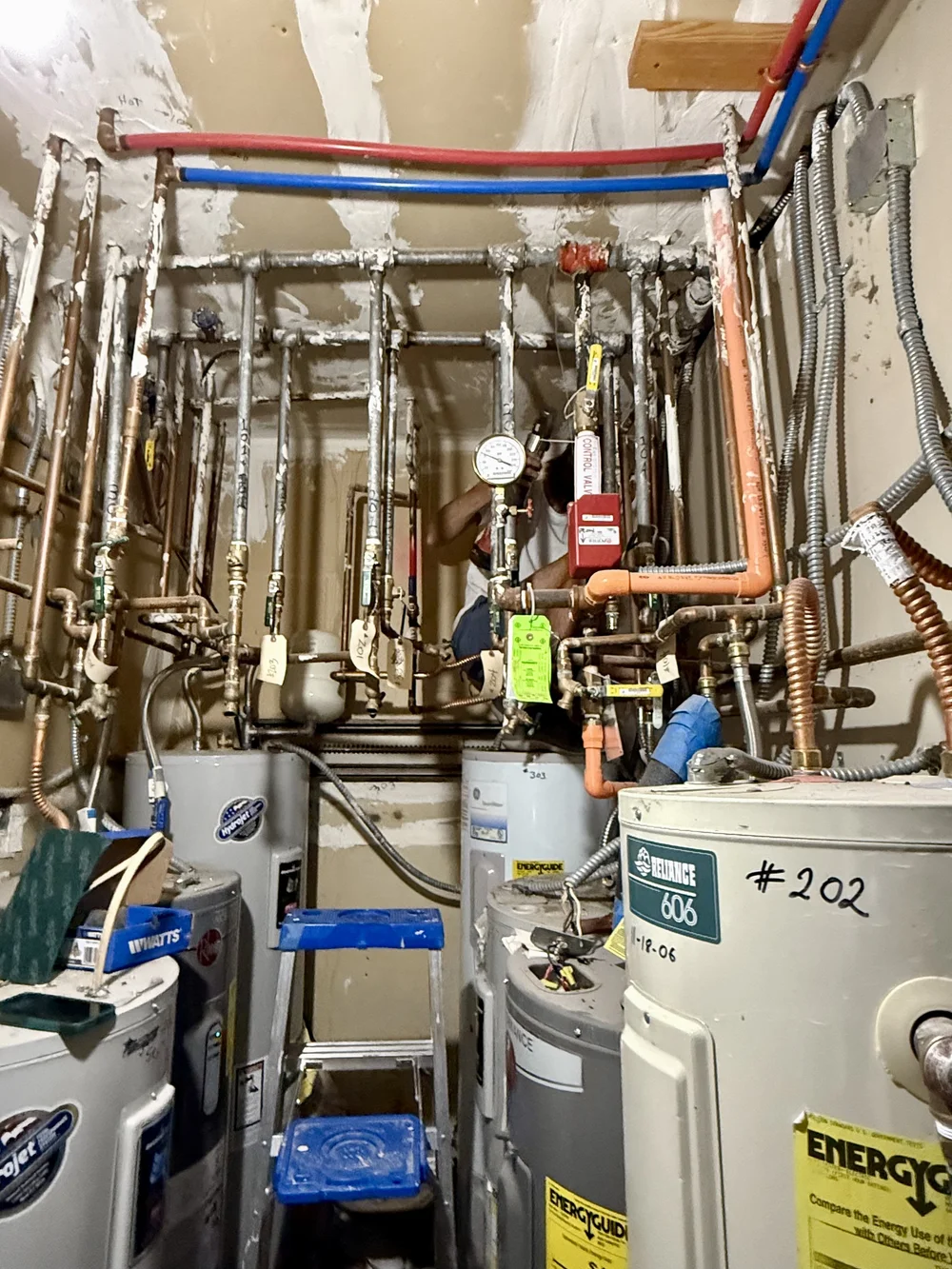
Understanding the existing conditions
Diagnosis before replacement.
Community systems are not always laid out as the original drawings suggest. Valves may have been replaced, piping rerouted, sections abandoned, or earlier repairs concealed. Those details change what can be isolated, how work should be sequenced, and whether a proposed repair is practical.
We examine the relevant configuration, explain what is known and what may remain concealed, and identify the decisions that need to be made before work proceeds.
Condominiums, townhomes & common areas
When a pipe fails, who is responsible?
The first question is often a plumbing question. The final responsibility decision may depend on the association's governing documents.
A leak inside one condominium does not necessarily originate in that unit. A shared drain may run through an individual residence. A pipe beneath a private street may serve several lots, while ownership and maintenance responsibility can depend on the recorded documents and utility arrangements.
What we can help establish
We focus on the physical facts: where the problem appears, what piping is affected, which fixtures or properties it serves, and whether the source is an individual branch, common line, building stack, or buried service.
Depending on access and the conditions, testing, tracing, camera work, and examination of shutoff and meter arrangements may help narrow the source and define a reasonable repair.
We can explain the plumbing findings so the board, manager, owner, or other responsible party can determine the next step within their established process.
Questions worth answering early
- Does the problem affect one fixture, one residence, several units, or a common facility?
- Where are the accessible shutoffs, meters, risers, and branch connections?
- Is the piping part of a shared system, an individual service, or a limited common element?
- Which representative can authorize diagnosis, unit access, and repairs?
- What do the declaration, plat, maintenance provisions, and utility records establish?
Important distinction: Identifying a pipe or diagnosing a failure is not the same as deciding legal ownership, insurance coverage, or who must pay. Utah condominium and community association rules have different frameworks, and the declaration or other governing documents may affect the answer. Artisan Plumbing provides plumbing findings; the association and its advisors determine responsibility.
For broader building and unit plumbing, explore our plumbing services in St. George and Washington County. For an overview of the legal distinctions between Utah association types, refer to the Utah Department of Commerce HOA guidance.
Active water loss or sewage concern
When several residents may be affected, contain the problem first.
For an active leak, loss of water service, suspected main break, or sewage backup, call with the community location, the affected area, and any known shutoff information. Emergency calls are accepted; response depends on availability and the work required. If a safe, accessible isolation point is known, an authorized representative can arrange to stop the water while the situation is assessed.
Private infrastructure & common property
Underground problems require more than a plumbing repair.
A failure beneath a landscaped common area, entry road, parking surface, or established utility corridor affects more than the buried pipe.
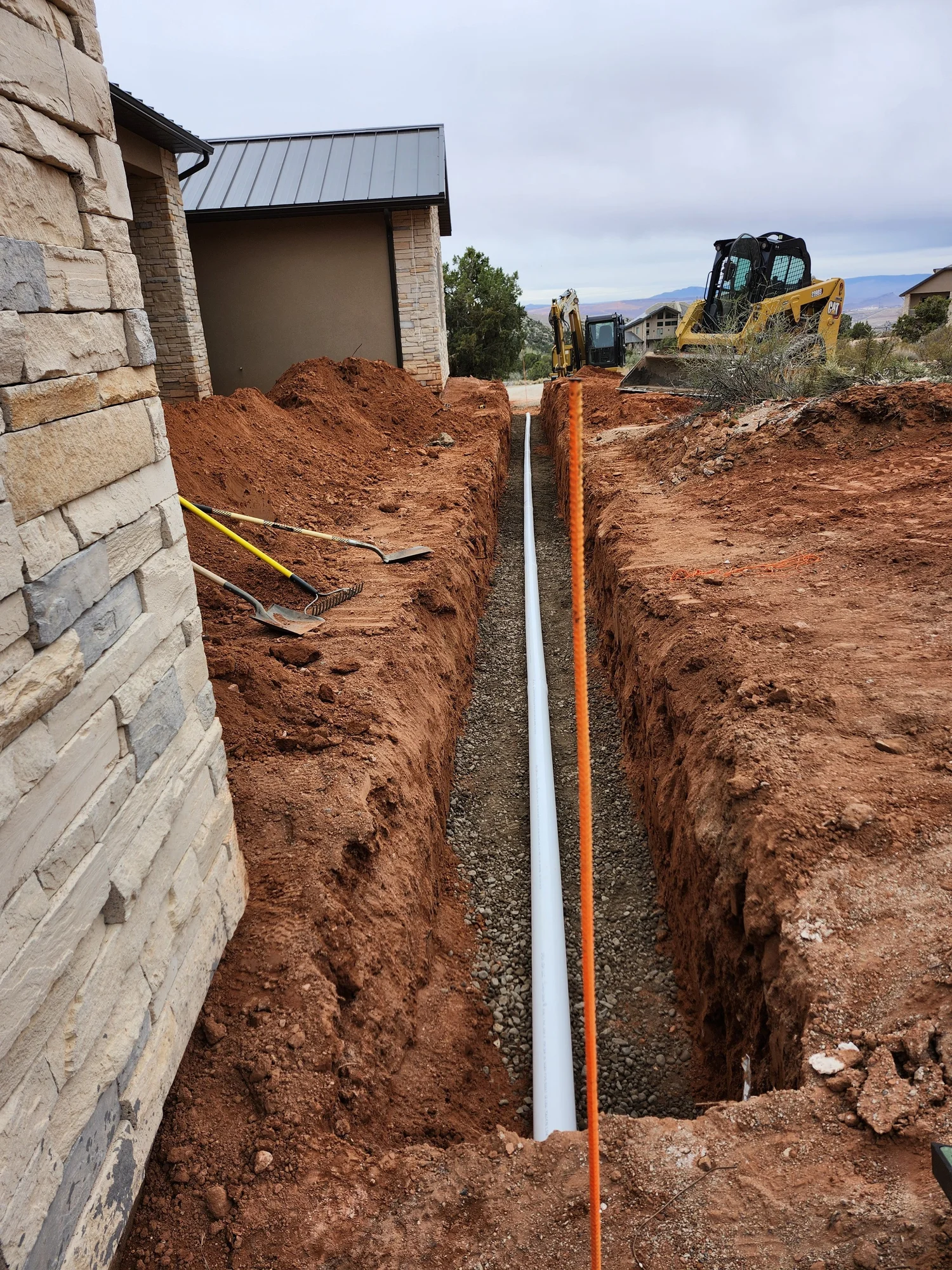
Artisan Plumbing and Artisan Group can coordinate locating, conventional excavation or hydrovac daylighting where appropriate, exposed-pipe repairs, and the associated backfill scope. That means fewer handoffs between the plumbing repair and the work required to reach it.
Plan the access as carefully as the repair.
Underground work may require understanding nearby utilities, irrigation piping, hardscape, landscape improvements, access for equipment, and how residents or service vehicles use the area.
We evaluate the location and method of access before recommending an approach. Hydrovac can be useful for daylighting buried utilities and working around congested systems, while conventional excavation may be the better fit for other portions of a project. This matters around entry monuments, fountains, pool decks, shared gathering areas, mature plantings, and occupied amenity buildings where unrestricted excavation is not practical.
The repair plan can also account for temporary isolation, required inspections, service restoration, and the limits of the agreed surface restoration scope.
A workable association process
Respecting the board, the manager, and the people who live there.
The best repair can still create problems when access, authority, and communication are unclear. We establish those boundaries early.
Define the concern
Identify the affected property, the symptoms, urgency, known system information, and the association's designated point of contact.
Coordinate entry
Plan around gates, common-area access, occupied units, other vendors, and the notices the association is responsible for arranging.
Explain the options
Describe the findings, likely work, foreseeable interruptions, and where concealed conditions could affect the scope.
Confirm authorization
Work within the board's or manager's approved authority. Material scope changes are referred to the authorized contact.
Document the work
Communicate completed work, outstanding concerns, and relevant follow-up information for the association's records.
We work under the association's direction, respect the community manager's role, and do not use subcontracted access to solicit residents or expand a defined scope without the appropriate approval. Homeowner communication, resident notices, and spending authority remain with the designated association representatives unless otherwise agreed.
Maintenance and capital planning
Make the next repair an informed decision.
Associations maintain more than pipelines. Clubhouses, aquatic facilities, water features, and shared grounds have plumbing assets that age on different schedules.
Recurring leaks, failing shutoffs, repeated sewer problems, aging piping, mineral-related damage, or difficult-to-isolate amenity systems may justify a broader evaluation instead of another isolated repair. We can help identify feasible service, renovation, and replacement scopes for the board to consider, whether that involves one clubhouse or several shared facilities across a larger development.
Understand repeat problems
Review symptoms and available repair history to distinguish a recurring local issue from conditions that may involve larger sections of the system.
Improve serviceability
Evaluate shutoff access, valve function, exposed piping, and practical isolation improvements that can reduce the number of affected properties during future work.
Plan work in phases
Discuss defined repair areas, coordinated access, likely interruptions, and the practical sequence for replacing selected components across buildings, pools, water features, and landscaped common areas. Coordinate timing around high-use amenity seasons and community events.
Useful information for board review
A board may need a clearly described scope, the reason for recommending it, known limitations, and an understanding of what may change once concealed piping is exposed. We can provide plumbing findings and proposals for defined work, with the recommended scope, observable conditions, and known limitations clearly described. These do not replace engineering reports, legal opinions, or formal reserve studies.
When an association already has engineering recommendations or a reserve analysis, those materials can help frame the work requested and the decisions the board needs to make.
Water use deserves attention in Southern Utah
Large landscaped common areas, multiple meters, irrigation connections, pool makeup water, decorative fountains, hidden leaks, and pressure issues can complicate an association's water use. Understanding what each meter supplies and which systems run automatically is more useful than assuming every increase in consumption comes from homeowner fixtures.
We evaluate applicable plumbing supply, valves, backflow protection, underground lines, and pressure concerns while coordinating with the community's pool, landscape, or irrigation vendors where their scope is involved. For local context, see our guide to water use and penalty gallons in Washington County.
Locally grounded service
HOA plumbing throughout Washington County.
Artisan Plumbing serves community associations throughout the St. George area, including Washington City, Hurricane, Santa Clara, and Ivins. Our work is relevant to established condominium and townhome complexes, gated neighborhoods, newer master-planned communities, and associations responsible for larger shared utility systems.
Southern Utah brings its own operational considerations: hard water and mineral scale, elevation-related pressure changes, extensive landscape irrigation, outdoor water features, heavy summer use of pool facilities, and expanding residential infrastructure. We consider those conditions alongside each property's actual system, rather than applying one standard answer to every community.
Preparing a service request
What to include when you contact us
- Community name and city, plus the affected building, area, or utility.
- Whether the issue affects a residence, clubhouse, pool facility, fountain, landscape area, or shared utility.
- Symptoms, urgency, and any known shutoff or meter details.
- Available photos, meter or equipment information, plans, previous repairs, or test notices.
- The designated association contact and who can authorize the work.
- Access restrictions, planned work windows, and any required vendor paperwork.
For security, arrange gate codes and restricted access details directly with the authorized project contact rather than posting them in a public inquiry.
Send an association project inquiry. For vendor onboarding, tell us which license, insurance, and administrative documents your association requires.
Questions from boards and community managers
HOA & community association plumbing FAQs
Practical answers for associations evaluating a repair or looking for a dependable plumbing contractor.
Do you work directly with HOA boards and community association managers?
Yes. Artisan Plumbing works with boards, designated association representatives, and professional community managers. We establish the contact authorized to request and approve work and coordinate within the association's process.
Do you service condominium and townhome associations?
Yes. Our plumbing scope includes shared water piping, drain and waste stacks, shutoff valves, building water systems, individual-unit repairs when authorized, and coordinated work in occupied buildings. Explore our plumbing services page for more detail.
Who pays for a pipe repair in an HOA or condominium?
Responsibility depends on the property type, the location and function of the pipe, governing documents, and sometimes insurance or utility arrangements. We can identify and explain plumbing conditions, but the association, owner, management team, and appropriate advisors determine responsibility under the applicable documents.
Can you diagnose a leak affecting more than one home?
Yes. We investigate water leaks, pressure problems, and shared piping concerns, including possible involvement of common water lines, risers, branch connections, or buried services. Access and testing depend on the system configuration and the affected areas.
Can you repair an HOA-owned water main or private sewer line?
We perform underground water and sewer line diagnosis and repairs and can coordinate the related excavation through Artisan Group. The property and utility records should be reviewed to establish whether the line is privately maintained or part of the utility system, and which entity authorizes the work.
Do you offer backflow testing for common-area irrigation systems?
Yes. Artisan Plumbing provides Utah-certified backflow testing and can repair or replace assemblies and associated plumbing where needed. The required testing, reporting, and device configuration depend on the serving water authority and installation. See backflow services.
Can you work on the water infrastructure serving HOA landscaping?
Yes. We can service and repair defined supply mains, isolation valves, pressure regulation, backflow assemblies, and related underground piping serving common landscape areas. We coordinate with the association's established landscape or irrigation contractor on sprinkler heads, controller programming, planting, and other specialist work. See landscape water infrastructure and decorative features.
Do you service and renovate HOA clubhouses and community centers?
Yes. We handle the plumbing portion of clubhouse service, maintenance, and renovations, including restrooms, showers, kitchens, hot water, drains, fixture upgrades, and piping modifications. We coordinate the work with management and the other trades involved so the approved project fits around facility access and scheduled use.
Can you repair plumbing associated with community pools and spas?
We can evaluate and repair defined water supply, makeup-water, backflow, valve, piping, and drainage issues serving HOA pool and spa facilities, including adjacent showers, pool-house restrooms, and equipment rooms. Pool-shell repairs, regulated circulation design, chemical treatment, and ongoing pool operation require the appropriate qualified specialists. The Southwest Utah Public Health Department provides local public-pool requirements.
Do you maintain an HOA pool or handle its water chemistry?
Our maintenance work relates to approved plumbing and related water infrastructure, not lifeguarding, water-chemistry management, or the qualified pool-operator responsibilities of a public pool. We can coordinate plumbing maintenance, repairs, and renovation-related work with the association's pool operator and specialized aquatic contractors.
Can you service decorative fountains, waterfalls, and common-area water features?
Yes, for the applicable plumbing and water-system portions. We can investigate leaks, evaluate water feeds and accessible valves, and repair or modify defined supply, recirculation, return, overflow, and drain piping. Projects involving specialty fountains, pumps, electrical controls, or engineered aquatic systems can be coordinated with qualified specialists when required.
Can you help with upgrades to outdoor kitchens, restrooms, and recreation spaces?
Yes. Scope may include water and drain piping, fixture replacement, gas-piping modifications for approved installations, drinking fountains, washdown stations, and underground utilities serving common gathering areas. We confirm the work with the association and coordinate other trades or approvals appropriate to the project.
Can Artisan Plumbing provide ongoing maintenance for multiple community amenities?
We can discuss recurring service needs and defined maintenance scopes for the plumbing systems serving clubhouses, community restrooms, water features, pool-adjacent facilities, and shared grounds. The frequency, reporting, inspections, and responsibilities are agreed with the association rather than assumed as an all-inclusive facilities-management contract.
Can you investigate unexplained water use across a planned community?
Yes. We can review observed water losses or pressure issues and evaluate plumbing components serving the affected areas, such as common-area supply lines, meters, isolation valves, automatic fill feeds, pressure regulation, and buried piping. Pool evaporation, irrigation schedules, and water-feature operation also affect usage and may need input from the property's pool and landscape vendors.
Can you help with community water pressure problems?
Yes. We evaluate plumbing pressure concerns, pressure reducing valves, shutoffs, and affected supply piping. Different elevations, system configurations, and irrigation demands can change what needs to be tested before a repair is recommended.
Can you coordinate planned water shutoffs for several residences?
Yes. We can plan the plumbing sequence and anticipated shutdown requirements with the authorized association representative. The manager or board remains responsible for required resident notifications and access arrangements unless the parties have agreed otherwise.
What should an HOA do when there is an active water or sewer emergency?
Call (435) 900-5600 with the location, affected area, and any known shutoff information. An authorized representative should arrange safe water isolation where possible and follow the community's emergency procedures. We accept emergency calls, subject to availability.
Do you work inside gated communities and restricted-access areas?
Yes, when the association provides the necessary authorization and site access. We coordinate gate entry, work areas, equipment access, and scheduling with the designated contact and observe the property's established procedures.
How are proposals, changes, and board approvals handled?
We identify the scope being requested and the person authorized to approve it. For planned work, the association can review the proposed scope and associated pricing before proceeding. Material changes that require additional authorization are referred to the designated representative.
Can you help the board plan repairs or phased replacements?
Yes. We can evaluate plumbing conditions and discuss defined repairs, replacements, isolation improvements, and practical project sequencing. A contractor's plumbing assessment or proposal is not a substitute for an engineer's report or a formal reserve study.
Can you manage the excavation portion of a plumbing repair?
Yes. Artisan Group has in-house excavation capability, including conventional excavation and hydrovac daylighting where appropriate. We can coordinate access to buried piping with the plumbing repair and the agreed backfill scope, reducing the need for separate contractors on applicable projects.
Does the HOA have to sign a maintenance contract to request service?
No standing maintenance contract is required to inquire about a specific plumbing project or service visit. We can discuss a defined job, recurring needs, or an ongoing vendor relationship based on the community's actual requirements.
Can you provide licensing and insurance details for HOA vendor approval?
Yes. Artisan Plumbing is licensed, bonded, and insured. Tell us what license information, proof of insurance, or other vendor onboarding paperwork your board or management company requires so we can address those requirements during the proposal process.
Which Southern Utah communities do you serve?
Artisan Plumbing serves St. George, Washington City, Hurricane, Santa Clara, Ivins, and surrounding Washington County communities. Contact us with the association location and scope to discuss the project.
Artisan Quality | Exceptional Client Experience
A capable plumbing partner for the community you represent.
Whether your association needs a clubhouse repair, pool-area plumbing improvements, help with a fountain or landscape water line, or a larger infrastructure renovation, Artisan Plumbing and Artisan Group bring practical experience, clear scopes, and respect for the board's direction and established vendor relationships.