
Water Heater Repair & Replacement
St. George & Southern Utah
Hot water problems can come from the water heater itself, the fuel or electrical supply, plumbing conditions around the unit, or a combination of factors. Artisan Plumbing provides water heater repair, replacement and installation throughout St. George and Washington County, with service for traditional tank and tankless systems.
Our approach starts with determining what has actually failed. We look at the equipment, the installation and the conditions affecting it before recommending a repair or replacement. When work is needed, we provide the repair or replacement price for approval before proceeding.
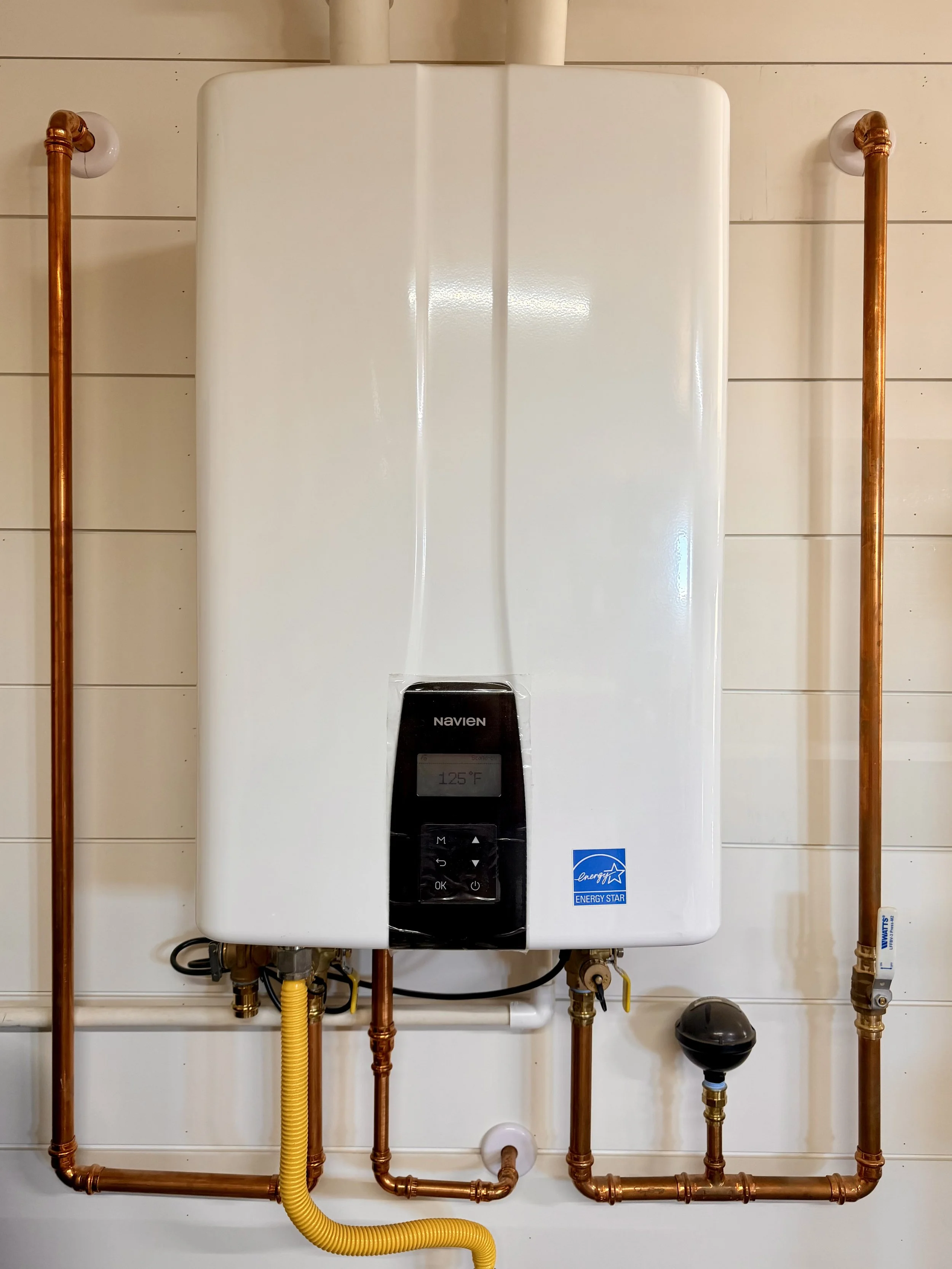
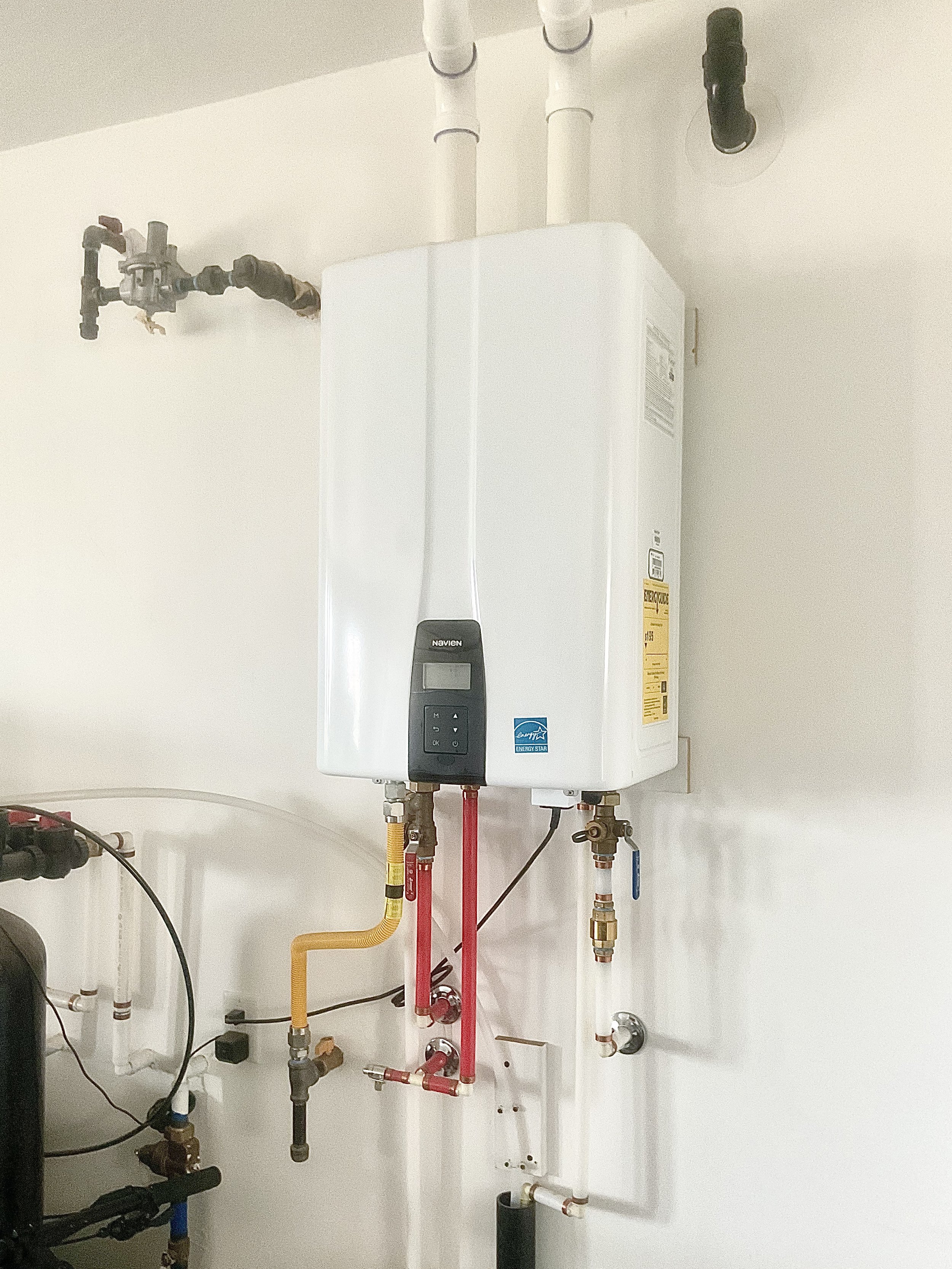
Tankless Gas Navien water heater replacement, installed by Artisan Plumbing.
Water Heater Problems We Diagnose
A water heater does not necessarily need to be replaced because it stops producing hot water. Depending on the type of system, the problem may involve a heating element, thermostat, ignition component, gas control, burner, electrical supply, valve, venting issue, scale buildup or another serviceable component.
We also look beyond the obvious symptom. Water that is not staying hot long enough can be a sizing issue, a failed component or unusually high demand. A leaking connection is different from a leaking tank. Noise from a storage water heater can point to sediment accumulation, while reduced performance from a tankless system may be related to scale, flow conditions or maintenance.
Common reasons to have a water heater evaluated include:
• No hot water or inconsistent water temperature
• Hot water running out sooner than it used to
• Water around the heater or visible leaking connections
• Popping, rumbling or unusual operating noise
• Discolored or unusual smelling hot water
• A tankless unit displaying an error code or shutting down
• A water heater that needs repeated repairs
• Concerns about the age or condition of an existing unit
The objective is to identify the actual problem before deciding what to do about it.
Water Heater Repair or Replacement
Age matters, but it should not be the only reason a water heater is replaced.
A failed heating element in an otherwise sound electric water heater is a very different problem from a tank that has begun leaking through the vessel itself. Likewise, an older unit with a relatively minor repair may still be reasonable to keep in service, while repeated failures, corrosion or problems with the tank can make continued repair difficult to justify.
When we evaluate whether repair or replacement makes sense, we consider the condition of the water heater, the specific failure, previous repair history, installation quality, household hot water demand and the cost of the available options.
If replacement is appropriate, we also look at whether the existing water heater was properly sized and whether the current installation should simply be duplicated. A replacement is an opportunity to correct an undersized system, poor service access, aging connections or other conditions that may have contributed to the original problem.
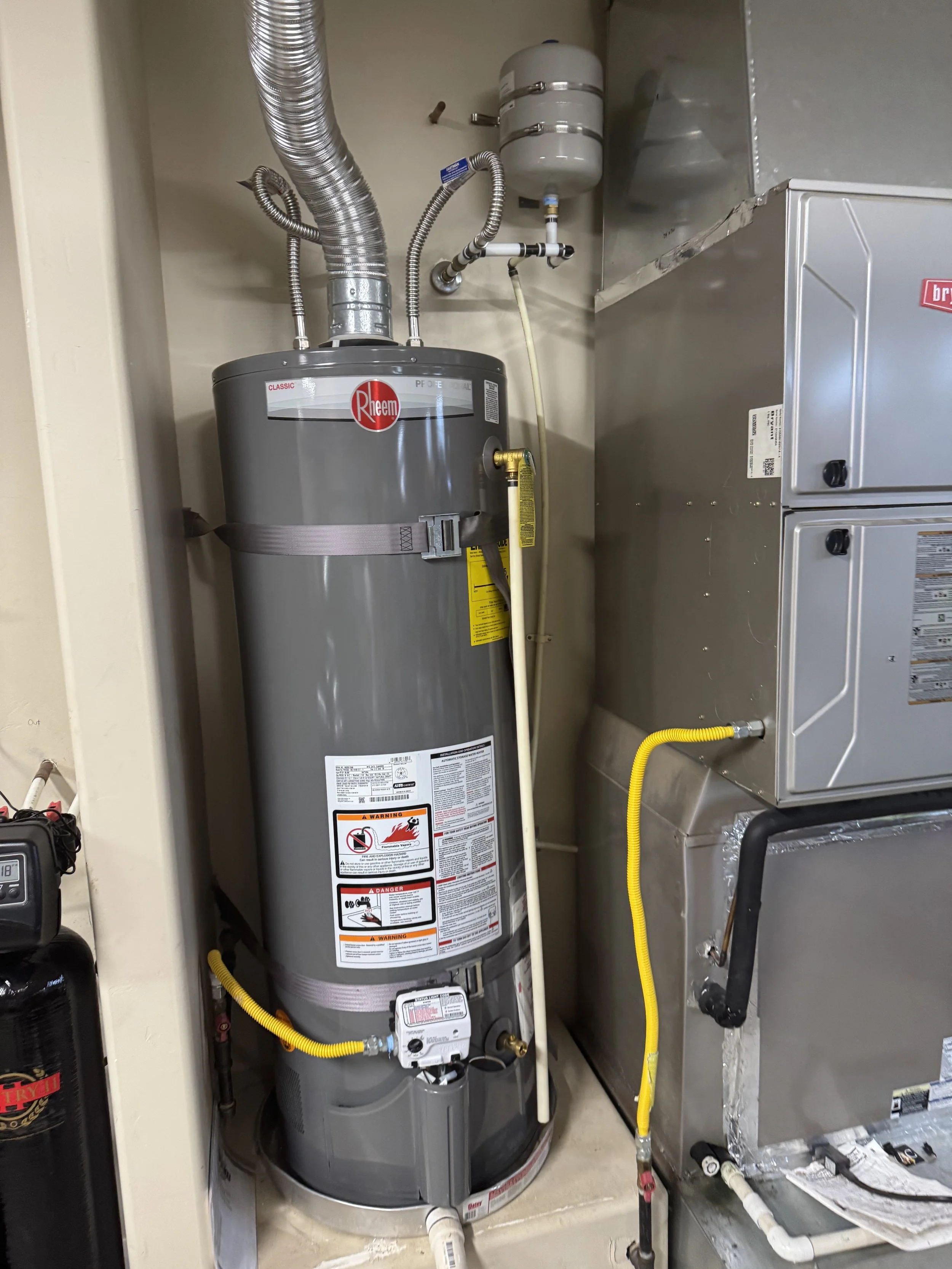
A gas traditional tank Rheem water heater, replaced by Artisan Plumbing.
Gas and Electric Water Heaters
Gas and electric water heaters perform the same basic job, but the equipment and the way problems are diagnosed can be quite different.
Gas Water Heaters
A traditional gas water heater uses a burner beneath the tank to heat the stored water. Depending on the unit, operation can involve an igniter, gas control valve, burner assembly, temperature controls, venting and combustion air.
When a gas water heater is not operating correctly, the problem may be with the heater itself or with the systems supporting it. We may need to evaluate ignition, burner operation, gas supply, venting, controls, temperature settings and the condition of the tank.
Replacement also requires more than selecting another tank of approximately the same size. Venting requirements, available gas capacity, physical clearances, drainage, safety components and service access all matter.
Electric Water Heaters
Traditional electric water heaters commonly use one or more heating elements inside the tank rather than a gas burner. Thermostats control when those elements operate.
An electric unit that produces some hot water but not enough may have a different failure than a unit that produces no hot water at all. Diagnosis can include the elements, thermostats, electrical supply, wiring and the overall condition of the tank.
If an electric water heater is being replaced, we consider the electrical requirements of the new equipment along with capacity, recovery rate, household demand and the existing installation.
Should You Switch From Gas to Electric, or Electric to Gas?
Sometimes changing fuel types makes sense. Often, replacing a water heater with a similar properly sized system is the simpler and more economical approach.
A conversion can involve much more than the water heater. Gas availability, venting, electrical capacity, installation location and the cost of modifying the supporting systems all need to be considered.
We can compare the practical options for the property rather than assuming one fuel type is automatically better than the other.
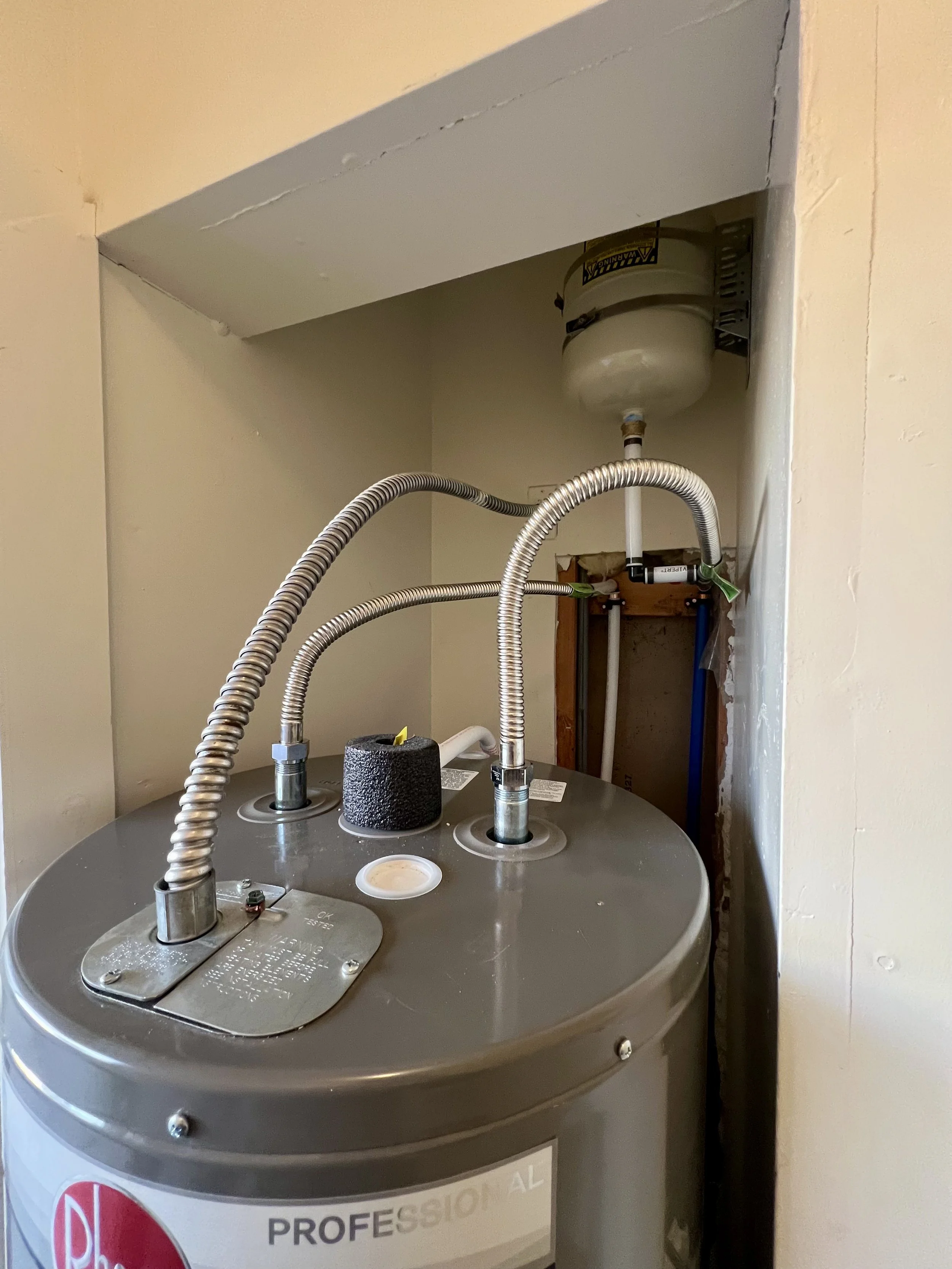
Traditional Tank or Tankless Water Heater?
Both systems can be excellent when they are selected for the right application.
A traditional tank water heater stores a set amount of heated water and reheats it as the supply is used. Tank systems are familiar, relatively straightforward to service and often have a lower initial installation cost. The important part is selecting enough storage and recovery capacity for the household.
Tankless water heaters heat water as it is needed rather than storing a full tank. They can provide long periods of continuous hot water, but the system still has limits. Proper sizing depends on expected flow, incoming water temperature and how many fixtures may be using hot water at the same time.
A tankless conversion may also require changes to the existing gas supply, venting or electrical system, and local water hardness should be considered when determining whether water treatment or additional scale control is appropriate.
For some homes, tankless is an excellent fit. For others, a properly sized storage water heater remains the more practical choice.
Southern Utah Water and Your Water Heater
Water quality matters to water heating equipment.
Southern Utah has mineral rich water, and those minerals can become more concentrated when water is heated. In a traditional tank, mineral sediment can collect at the bottom of the heater. Over time, that buildup can contribute to noise, reduce usable tank volume and affect heating performance.
Tankless water heaters are particularly sensitive to mineral scale because water passes through a compact heat exchanger where it is heated rapidly. In Southern Utah, water quality should be considered as part of the tankless installation itself. Depending on measured water hardness and the manufacturer’s requirements, a whole home water softener or another approved scale control system may be recommended or required. Even with water treatment, tankless equipment should be maintained according to the manufacturer’s specifications, which may include periodic flushing or descaling.
Water conditions can also affect other components, including valves and sacrificial anode rods inside many storage water heaters.
This does not mean every water heater problem in Southern Utah is caused by hard water. It does mean water quality should be considered when diagnosing recurring problems, selecting new equipment and developing a maintenance plan. With tankless equipment in particular, the water heater and the water feeding it should not be treated as separate decisions.
For a deeper explanation of local water conditions, see our Southern Utah Water Quality resource.
What We Look at Before Recommending a Replacement
The water heater is one part of a larger plumbing system. Replacing the equipment without looking at the surrounding installation can recreate an existing problem with a new unit.
Depending on the property and the type of equipment, we may evaluate water pressure, thermal expansion, shutoff valves, supply connections, drainage, relief piping, venting, gas or electrical requirements, available installation space and future service access.
We also look at how the household actually uses hot water.
A home with a large soaking tub, multiple showers or several fixtures regularly operating at the same time may have very different requirements from another home with the same number of bedrooms. Sizing should reflect real demand rather than simply copying the capacity of the old water heater.
Choosing the Right Replacement Water Heater
There is no single best water heater for every home.
The right replacement depends on the property, existing utilities, available space and the amount of hot water the household expects the system to deliver. Equipment specifications matter, but they need to be interpreted in the context of the actual installation.
For traditional tank water heaters, capacity and recovery performance both matter. Two tanks with similar gallon ratings may not deliver hot water at exactly the same rate under real household demand.
For tankless equipment, the advertised ability to produce continuous hot water does not mean unlimited flow. The heater still needs enough capacity to support the fixtures being used simultaneously.
We also consider serviceability. Equipment should be installed in a way that allows future maintenance and repair without unnecessarily complicating access to the unit or surrounding plumbing.
Water Heater Installation Is More Than an Equipment Swap
A clean installation is not just about appearance.
Connections should be appropriate for the equipment and installation. Relief piping, drainage, venting, thermal expansion protection, gas or electrical requirements and required safety components need to work together as a system.
We also pay attention to the condition of the plumbing immediately around the water heater. Reusing a failing valve, corroded connection or poor existing configuration simply because it was already there can undermine an otherwise good replacement.
The goal is not to add unnecessary work. It is to leave the new water heater with an installation that makes sense for the equipment, the property and future service.
Water Heater Maintenance
Maintenance requirements vary by water heater type, manufacturer and local water conditions.
Traditional tank water heaters may benefit from periodic inspection and flushing when appropriate. The anode rod, valves and visible connections can also provide useful information about the condition of the system.
Tankless manufacturers commonly specify periodic maintenance or descaling, particularly in areas with mineral rich water. Following the equipment manufacturer's requirements can help maintain performance and reduce avoidable scale accumulation.
Maintenance cannot prevent every mechanical failure, but it can provide an opportunity to identify developing problems before they become a no hot water call or a leak.
What to Expect From Artisan Plumbing
We prefer to diagnose the problem before turning the conversation into a replacement sale.
Once we understand what is happening, we explain the available options and provide pricing for the work before moving forward. If a repair is reasonable, we can discuss the repair. If replacement makes more sense, we can explain why and help select equipment suited to the property rather than simply installing whatever happens to match the old tank.
That process is part of the standard we apply across Artisan Plumbing: sound technical work, clear communication and respect for the home and the people living in it.
Artisan Quality | Exceptional Client Experience.
Frequently Asked Questions
Can a leaking water heater be repaired?
It depends on where the leak is coming from. A leaking valve, connection or nearby plumbing component may be repairable. If the tank itself has failed and is leaking through the vessel, replacement is generally required. The first step is determining the actual source of the water.
How do I know whether to repair or replace my water heater?
The decision depends on more than age. We consider the type of failure, tank condition, repair cost, repair history, overall installation and whether the existing equipment still meets the property's hot water needs.
Why is my water heater making popping or rumbling noises?
In a traditional storage water heater, noise can sometimes be associated with sediment or mineral accumulation in the bottom of the tank. Other conditions can also create unusual sounds, so the cause should be evaluated rather than assumed.
Does Southern Utah's hard water affect water heaters?
It can. Mineral rich water can contribute to sediment inside traditional tanks and scale within tankless heat exchangers. The actual effect depends on the equipment, water conditions, temperature and maintenance history.
Is tankless always better than a traditional tank?
No. Tankless systems offer advantages for certain homes, but traditional tank water heaters remain an excellent option in many applications. Installation cost, household demand, fuel availability, required modifications, maintenance and available space should all be considered.
Can I replace a gas water heater with an electric one?
Possibly. The practical question is whether the property's electrical system can support the new equipment and whether the conversion makes financial and functional sense. Converting from electric to gas similarly depends on available gas service, venting and installation conditions.
Why does my hot water run out so quickly?
Possible causes include a failed heating component, sediment, unusually high demand or a water heater that is undersized for the household. In some cases, the water heater may be operating normally but simply cannot keep up with simultaneous use.
Do you repair tankless water heaters?
Yes. Artisan Plumbing services tankless water heaters as well as traditional gas and electric storage water heaters. Tankless diagnosis may involve error codes, ignition, flow conditions, scale buildup, fuel supply and other equipment specific components.
Water Heater Service Across Washington County
Artisan Plumbing provides water heater repair, replacement and installation throughout St. George, Washington, Hurricane, Ivins, Santa Clara and surrounding Washington County communities.
Whether the problem is a leaking tank, inconsistent hot water, a tankless error code or an older system that may be ready for replacement, we can evaluate the equipment and explain the practical options before work begins.