

Water softeners, filtration & treatment
Water Softeners & Water Treatment in St. George & Southern Utah
Southern Utah water is naturally mineral rich, and for many homeowners the effects show up quickly through scale, spotting, buildup on fixtures and added stress on plumbing equipment. But hard water is only one reason to consider water treatment.
Artisan Plumbing installs whole home water softeners, filtration, conditioning and specialty treatment systems throughout St. George and Washington County. We look at the home, the incoming water, household demand and what you actually want to improve before recommending equipment.
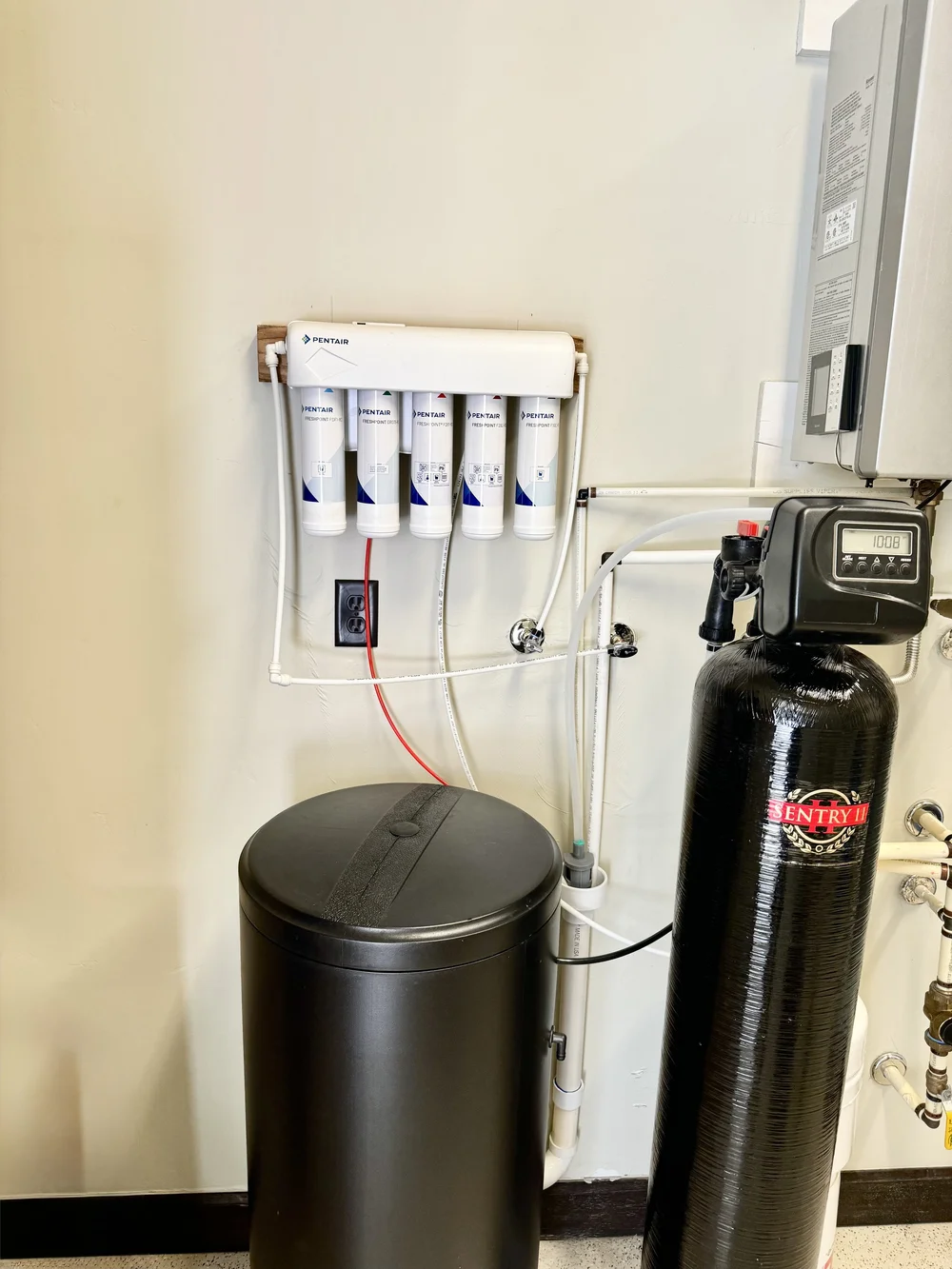
What Brings You Here?
Whether you're deciding on a new system or trying to understand one you already own, choose the issue most relevant to your home.
Water Treatment Services
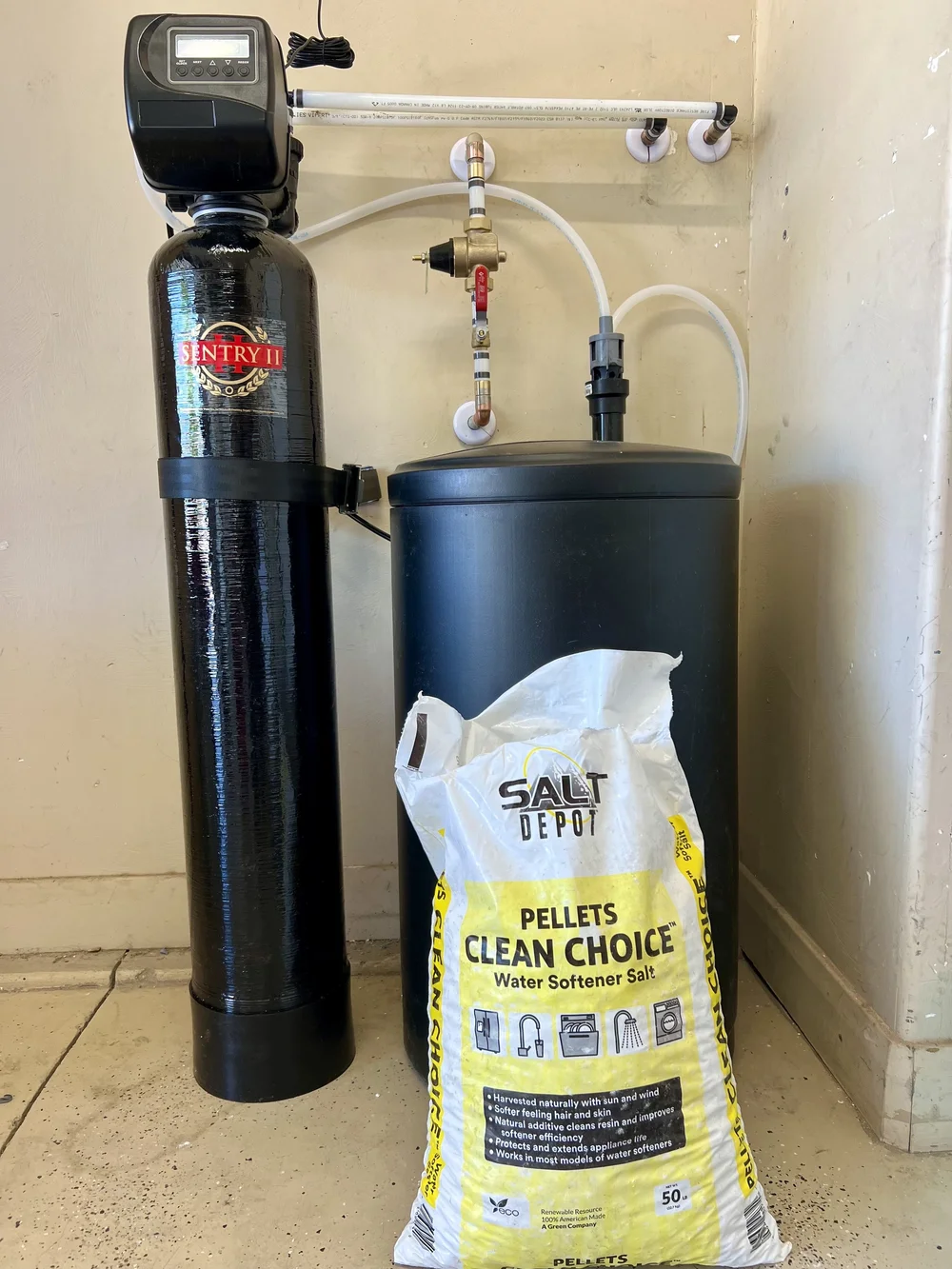
Water Softeners
A traditional water softener is designed to produce genuinely softened water.
Water passes through ion exchange resin, where calcium and magnesium responsible for hardness are removed and exchanged for sodium or potassium ions. The system periodically regenerates so the resin can continue treating incoming water.
For homeowners who want to change the actual hardness of the water rather than simply manage scale, traditional softening remains an established treatment method.
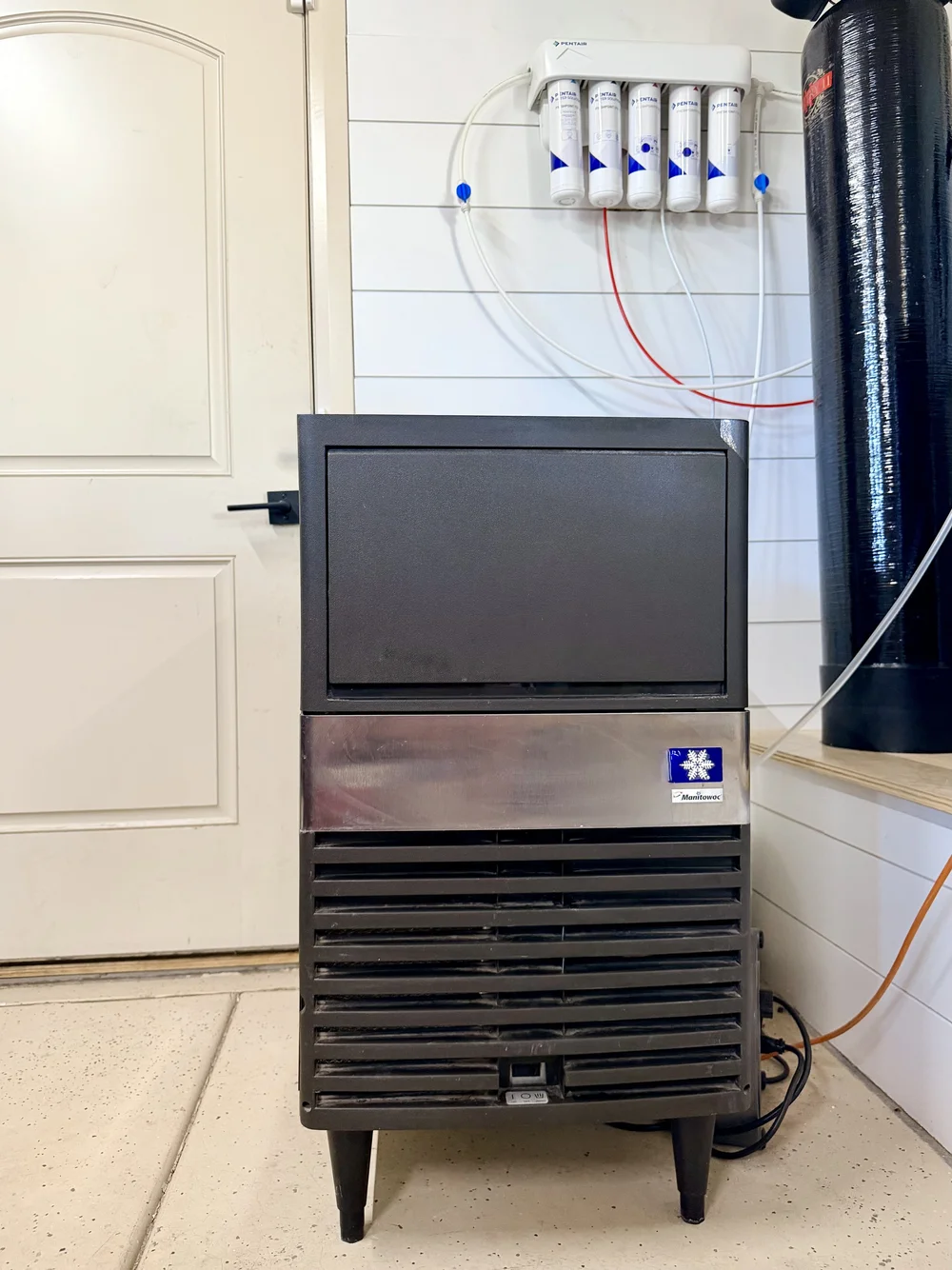
Whole Home Water Filtration
Whole home filtration addresses a different set of water quality concerns.
Instead of removing hardness minerals, filtration equipment uses specific media to target what is present in the water before it is distributed throughout the house.
Depending on the application, that may include:
Sediment Filtration
Sediment filters capture particulate material before it travels farther into the plumbing system or other water treatment equipment.
Carbon Filtration
Activated carbon is commonly used where chlorine, taste or odor are concerns. The specific performance of a system depends on the filtration media and equipment being used.
Multi Stage Filtration
Some homes benefit from more than one type of filtration or from filtration combined with another treatment method.
A whole home filter does not automatically soften water. Filtration and softening perform different jobs, which is why they are sometimes installed together.
Where reducing a particular substance is the goal, the equipment's published reduction claims and applicable certification matter more than a general “whole home filter” label. Learn how drinking-water filtration certifications work at NSF.
For dedicated drinking-water filtration, see reverse osmosis and Pentair filtration.
Request a Filtration Evaluation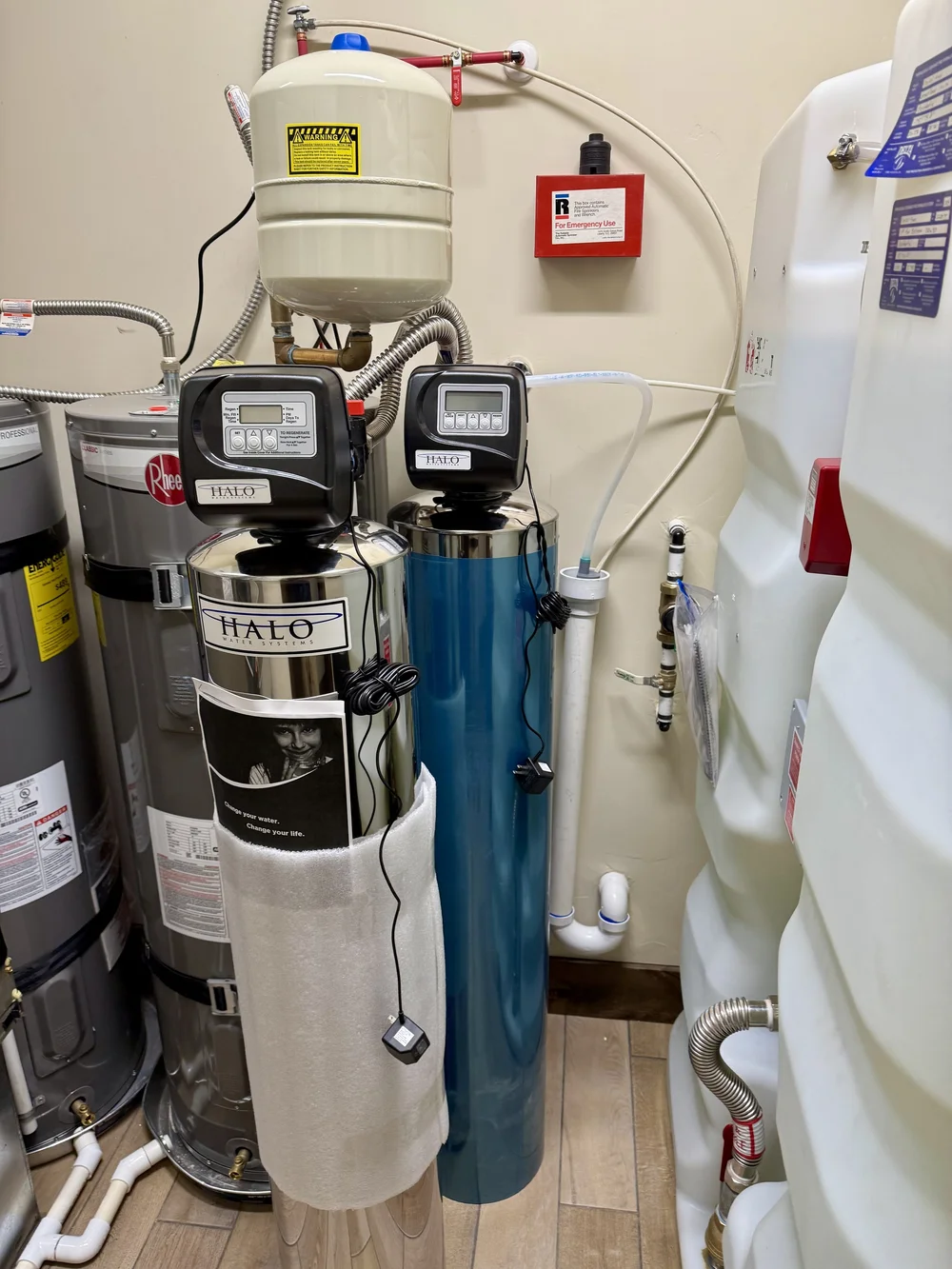
Salt Free Conditioning & Scale Control
Not every homeowner who is concerned about hard water wants a conventional water softener.
Salt free conditioning and other scale control technologies are designed to address the effects of mineral scale without using traditional ion exchange softening.
The important distinction is simple:
Salt free conditioning generally does not remove calcium and magnesium from the water.
The hardness minerals remain present, while the treatment technology is intended to change how those minerals behave or how readily scale forms.
That produces a different result from truly softened water.
A homeowner who wants the feel and performance of soft water may prefer traditional ion exchange. Someone whose primary concern is mineral scale and who wants to avoid a conventional salt based system may prefer a conditioning approach.
Neither option is automatically right for every home.
Artisan Plumbing works with water treatment equipment from established manufacturers, including HALO Water Systems. The choice depends on the specific technology, water conditions and intended result, not the brand alone.
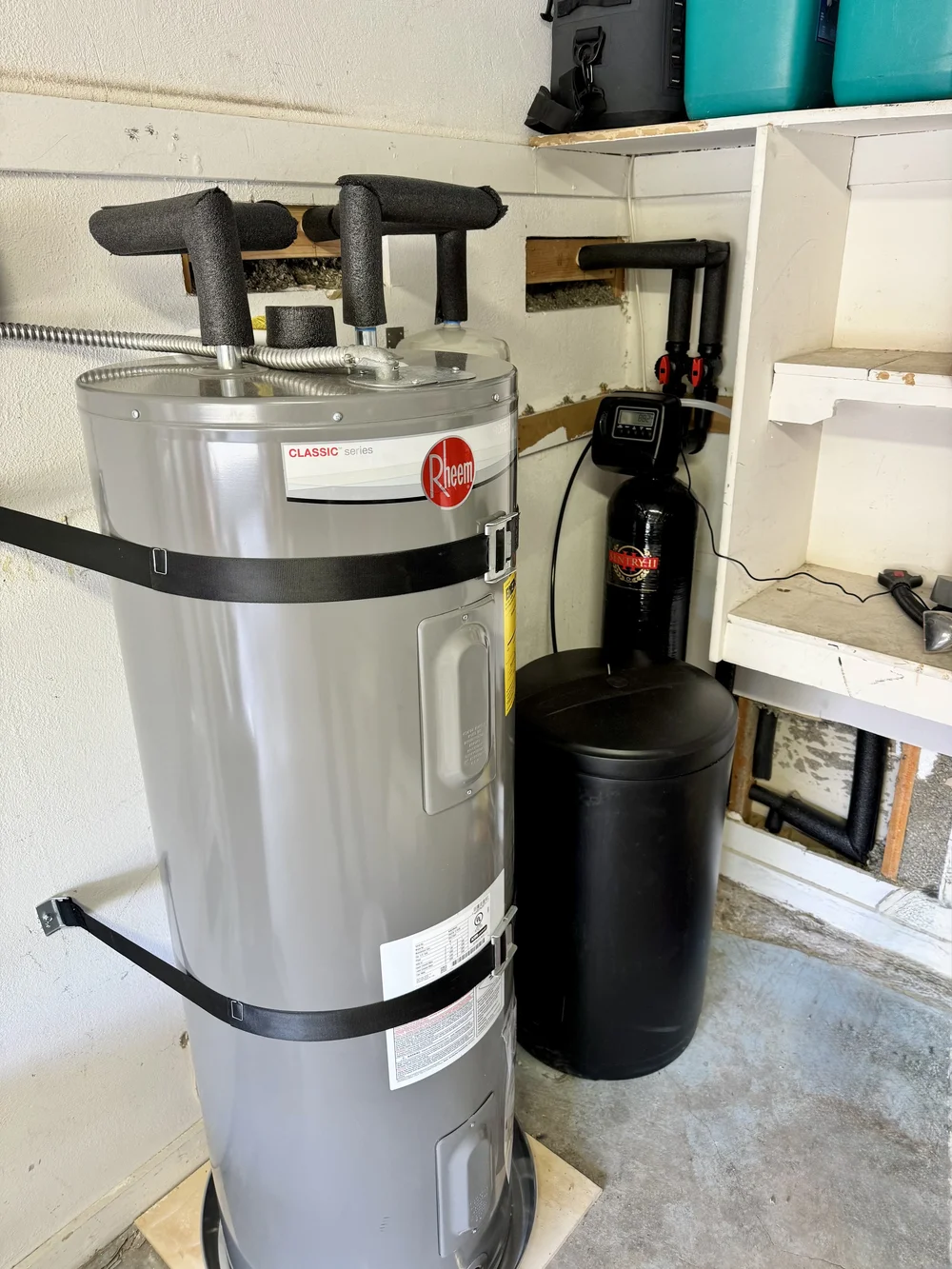
Combination Systems
Water treatment does not always fit into a single category.
Depending on the home and the treatment goals, a system may combine:
- Water softening and carbon filtration
- Sediment filtration and water softening
- Whole home filtration and scale conditioning
- Multiple filtration stages
- Whole home treatment with separate drinking water filtration
Combination systems can be useful when a homeowner wants to address several different water concerns at once.
The important part is understanding what each stage is actually doing. More tanks, more media or more treatment stages do not automatically create a better system.
Each component should have a reason for being there.
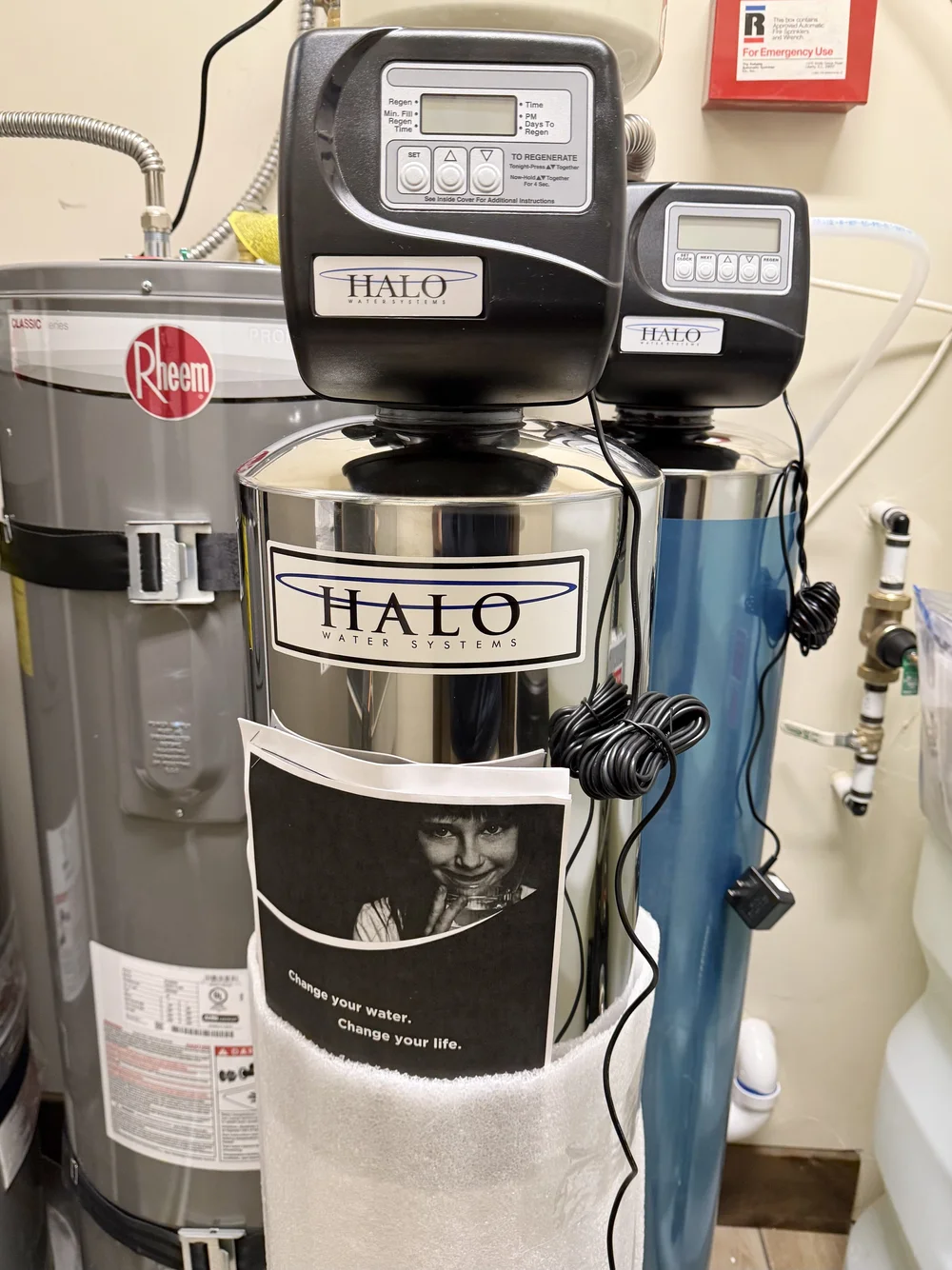
Existing Water Treatment Systems
Already have a softener or filtration system?
Artisan Plumbing also evaluates and services existing water treatment equipment.
Depending on the system and its condition, service may include:
- Filter replacement
- Brine system cleaning and maintenance
- Resin related service
- System troubleshooting
- Evaluation of existing equipment
If you are not sure what your current system does, whether it is working correctly or whether it still makes sense for the property, we can start by identifying what is already installed.
Common reasons to request an evaluation include returning scale, a system that no longer regenerates properly, changes in water pressure, unexplained salt use or uncertainty about the age and maintenance history of existing equipment.
Already a client? Access the Client Portal for your existing account.
Specialty Treatment & Drinking Water
UV & Specialty Water Treatment
Some water concerns require treatment beyond hardness, sediment or chlorine.
Ultraviolet systems use UV light to address microorganisms in water. UV does not soften hard water or remove dissolved minerals, so it serves a different purpose from a softener or conventional filtration system.
Specialty treatment may also be appropriate for particular water sources, properties or water quality concerns.
We evaluate those applications individually rather than treating specialty equipment as something every Southern Utah home needs.
For a specific contaminant concern, first identify the water source and the substance being addressed. The appropriate treatment and any testing needs depend on that information; not every filter or UV system is rated for every concern.
Our locally researched guide compares Washington County water-quality reports and explains mineral content, arsenic, fluoride, treatment byproducts and the limits of published utility data. Read the local water quality guide.
Drinking Water Filtration & Reverse Osmosis
Pentair multi-stage drinking-water filtration and reverse osmosis solutions for drinking, cooking, ice makers and other point-of-use applications. The treatment approach depends on the water and the particular substance you want to reduce.
Southern Utah Water Is Hard. Treatment Is Not One Size Fits All.
Hard water contains dissolved calcium and magnesium. In Southern Utah, those minerals can contribute to white scale on fixtures and shower glass, buildup inside plumbing equipment and water heaters, spotting and changes in how soaps and detergents perform.
The right treatment depends on more than the fact that the water is hard.
Some homeowners want the hardness minerals actually removed. Others primarily want to reduce scale. Some want chlorine or sediment filtered throughout the house. In other homes, the best solution combines more than one treatment method.
That is why we start with the problem the homeowner is trying to solve rather than starting with a particular product.
Want to understand the water itself? Visit our Southern Utah Water Quality resource for a deeper look at local water sources, hardness and mineral content.
Local water conditions vary by water supplier and source. A published utility report is a useful starting point, but a home's treatment decision should reflect its actual water and the issue being addressed. Total dissolved solids and hardness are not interchangeable measurements.
Different treatment goals
Remove hardness: conventional ion-exchange water softening.
Reduce specific constituents: matched sediment or carbon filtration, specialty media, or drinking-water reverse osmosis.
Manage mineral scale: a conditioning system suited to the application.
Different goals may call for different equipment or a combination.
Proper Sizing Matters
Proper Sizing Matters
Water softeners are often advertised by grain capacity, but selecting a system is more involved than simply choosing the largest tank.
Artisan Plumbing considers:
- Incoming water hardness: Harder water places greater treatment demand on the system.
- Household water use: The number of people in the home and typical water consumption affect required capacity.
- Peak flow: A home with several bathrooms or multiple fixtures operating at once may require greater service flow even if average daily water use is relatively modest.
- Regeneration requirements: The system should have enough capacity to serve the household efficiently without being unnecessarily oversized.
- Existing plumbing: Pipe size, pressure, installation space, drainage and existing water heating equipment all matter.
It's not just installing a softener, it's choosing one that fits the way the home actually uses water.
For a deeper explanation of grain capacity, flow rates, regeneration and household demand, read How to Choose the Right Water Softener for Your Home.
Which Treatment Does What?
The names sound similar, but the outcomes aren't interchangeable. Compare the primary purpose of each approach before deciding what your home needs.
Traditional softening
Removes calcium and magnesium hardness ions through ion exchange. Requires regeneration and a suitable drain arrangement.
Salt-free conditioning
Addresses mineral scale through a different treatment process. Typically leaves hardness minerals in the water.
Whole home filtration
Targets specified substances, such as sediment or chlorine, depending on the media. Not a substitute for hardness removal unless softening is included.
If the goal is water for drinking, cooking, refrigerator dispensers or ice, our Drinking Water Filtration & Reverse Osmosis page explains point-of-use treatment and how it can complement whole home equipment.
Choosing the Right Water Treatment System
There is no single water treatment system we recommend for every house.
Two homes in the same neighborhood can have different household demands, plumbing layouts, water heating equipment and priorities. One homeowner may want noticeably softer water. Another may care most about mineral scale. Another may be trying to address chlorine or sediment throughout the house.
Artisan Plumbing considers the entire application, including:
- What you want to change about the water
- Incoming water conditions
- Household demand
- Required flow
- Existing plumbing
- Water heating equipment
- Available installation space
- Maintenance preferences
- Future serviceability
The equipment should follow the application, not the other way around.
That also means we are not limited to one treatment technology. Different homes may call for traditional softening, filtration, salt free conditioning, specialty treatment or a combination.
Water Treatment Is Part of the Plumbing System
Whole home treatment equipment becomes part of the home's plumbing, so installation matters just as much as equipment selection.
A properly planned installation should consider water pressure, flow requirements, pipe sizing, bypass and isolation, drainage where required and access for future service.
Water treatment should also be considered alongside equipment such as tank and tankless water heaters.
Hardness scale can accumulate anywhere water is heated, making water treatment particularly relevant when protecting water heating equipment from Southern Utah's mineral rich water.
How We Approach the Work
System choice, installation quality and future service access belong in the same conversation. Our work begins with the actual water concern rather than a predetermined equipment package.
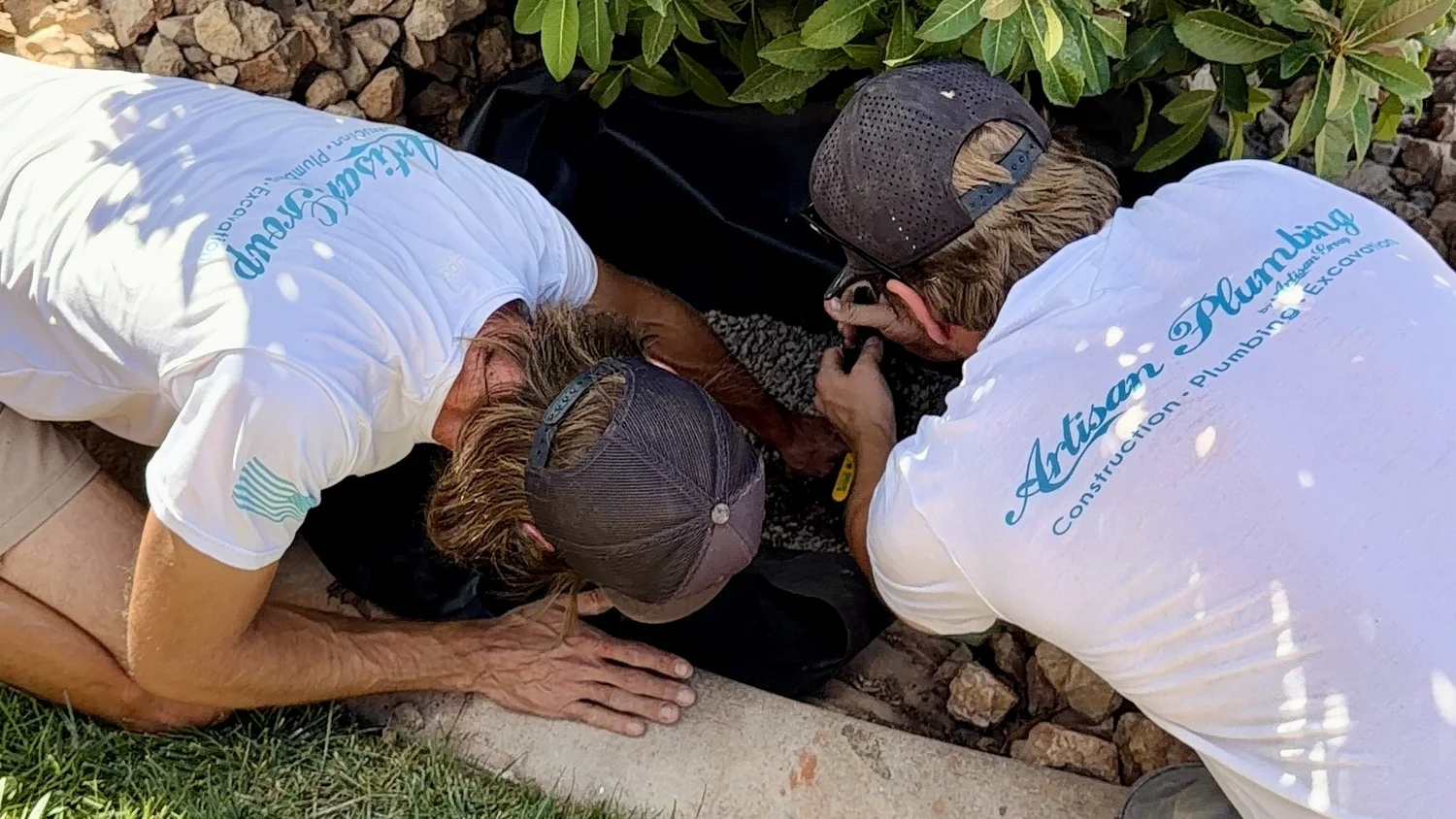
We Start With What You Want to Improve
You do not need to know which system you need before contacting us. We start with what you are noticing about the water, what you want to change and any concerns you have with your existing plumbing or equipment.
We Evaluate the Home and the Water
We consider the incoming water, household demand, plumbing configuration, water heating equipment, available installation space and the treatment goals for the property.
We Recommend the Right Treatment Approach
Depending on the application, that may be traditional water softening, whole home filtration, salt free scale control, specialty treatment or a combination. We explain what the recommended system does, what it does not do and what to expect for ongoing maintenance.
Professional Installation & Long Term Serviceability
The system is installed as part of the plumbing system, with attention to flow, pressure, bypass access, drainage where required and future maintenance.
Artisan Quality | Exceptional Client Experience
We explain the scope and price before proceeding. For qualifying installations, available payment options include major credit cards, ACH, Venmo and financing.
St. George & Washington County
Artisan Plumbing installs and services water softeners, whole home filtration, water conditioning and specialty water treatment systems throughout St. George, Washington, Hurricane, Ivins, Santa Clara and surrounding Washington County communities.
You do not need to know which system you need before contacting us. Tell us what you are noticing about your water and what you want to improve, and we can help determine the appropriate treatment for your home.
Need help with a plumbing issue rather than treatment equipment? Visit our Plumbing Service & Repair page or the main Plumbing Services overview.
Frequently Asked Questions
Do I need a water softener in St. George?
Hard water is common throughout Southern Utah, which is why water softeners and other scale treatment systems are common here. Whether you need a traditional softener depends on what you want the treatment to accomplish. If you want calcium and magnesium hardness actually removed, a water softener is different from a salt free conditioner or filtration system.
What is the difference between a water softener and a water conditioner?
A traditional water softener removes calcium and magnesium through ion exchange. Many water conditioners leave those minerals in the water while using another technology intended to reduce scale formation. They address related problems but do not produce the same result.
Does a whole home water filter soften water?
Not unless the system includes actual softening technology. Carbon and sediment filtration perform different functions from ion exchange softening.
Can I treat hard water without using salt?
Yes. Salt free scale control and conditioning systems are available. They generally do not remove the hardness minerals from the water, so the result is different from traditional softening. Whether that tradeoff makes sense depends on what you want to accomplish.
What size water softener does my home need?
Water hardness, household water use, peak flow, system capacity and the plumbing configuration should all be considered. Bathroom count is useful information, but it is not enough by itself to properly size a system.
Our softener selection guide explains these variables in more detail.
Can Artisan Plumbing repair or service my existing water softener?
Artisan Plumbing evaluates and services existing water treatment equipment, including troubleshooting, filter replacement, brine-system maintenance and resin-related service where appropriate. Whether a repair makes sense depends on the equipment, its condition and available parts.
Will a water softener remove arsenic, chlorine or other drinking-water contaminants?
A conventional hardness softener is designed primarily to remove calcium and magnesium. It should not be treated as a substitute for a drinking-water filter certified to reduce a specific contaminant. Different substances require appropriately selected treatment; read our local water-quality guide and reverse osmosis information.
Do I need a whole home filter and a reverse osmosis system?
Not necessarily. Whole home filtration treats the water entering the property, while reverse osmosis is commonly installed to treat drinking water at selected outlets. The right combination depends on your water source and treatment goals. We can evaluate each component separately.
Does water treatment help protect a tankless water heater?
Hardness minerals can accumulate where water is heated, including in tank and tankless equipment. Water treatment may be part of a maintenance and scale-management plan, but the specific approach should also follow the water heater manufacturer's requirements. See our water heater services.
How much does a whole home water treatment system cost?
Cost depends on the treatment method, system capacity, plumbing changes, drain and electrical requirements, available installation space, and the condition of existing equipment. Artisan Plumbing evaluates the application and explains the recommended scope and pricing. We accept major credit cards, ACH and Venmo; financing is also available for qualifying projects.
Tell Us What You Want to Improve
From a softener that isn't performing to a whole home treatment plan, Artisan Plumbing can help evaluate the equipment, plumbing and water-quality goals for your property in St. George and Washington County.
Describe the water conditions and what you want to change. Photos of existing equipment can help us understand the installation before discussing next steps.