
Latest Resources

Explore the Resource Library
Browse practical resources by topic.
-
Home Plumbing & Maintenance
- Oct 26, 2026 Water Penalty Gallons in Southern Utah: What Homeowners and Businesses Need to Know
- Oct 22, 2026 Water Pressure Reducing Valves (PRVs): Protecting Plumbing & Preventing Costly Repairs in Southern Utah
- Oct 10, 2026 How to Protect Your Property During Heavy Rain in Southern Utah
- Oct 5, 2026 Fall Plumbing Maintenance in Southern Utah: What Homeowners Actually Need to Do
- Underground & Excavation
- Water Heaters
- Water Quality & Treatment
Water Penalty Gallons in Southern Utah: What Homeowners and Businesses Need to Know
Understand how water penalty gallons affect your bill in Southern Utah. Explore Washington County's regional surcharges, city-specific water rates, and practical ways to manage consumption while maintaining the home or business you enjoy.
Understanding Washington County's water surcharge thresholds, local water rates, and practical ways to manage your bill without compromising your property or lifestyle.
Understanding your water bill shouldn't be complicated. Yet with varying municipal rates, regional surcharges, and seasonal allowances, the way those charges are calculated isn't always straightforward.
At Artisan Plumbing, we work with the plumbing systems that support homes and businesses throughout Washington County. We understand how important reliable water service is to maintaining your property, your comfort, and your quality of life.
We've put together this guide using published local utility rates, regional water policies, and actual household consumption data to help you understand your bill, compare what applies in your city, and identify practical ways to manage costs without giving up the things you enjoy about your property.
How Much Water Does a Southern Utah Household Actually Use?
Before looking at monthly surcharge thresholds, it helps to understand what ordinary residential water consumption looks like.
Household water use includes much more than showers, laundry, toilets, and dishes. It also supports landscaping, gardens, mature trees, swimming pools, and the many activities that make a property comfortable and functional.
Fortunately, Washington County has published actual residential consumption data, giving us a more useful local reference than relying on national averages alone.
According to the Washington County Water Conservancy District's 2023 Regional Water Master Plan, primary single-family residences in its historical sample averaged approximately 15,000 to 16,000 gallons per month between 2018 and 2020. [1]
These figures came from thousands of residential water meters and included both indoor and outdoor use supplied through the property's potable-water connection. Properties with separate secondary irrigation connections were excluded from this particular sample.
For another perspective, the U.S. Environmental Protection Agency estimates that Americans use an average of approximately 82 gallons per person per day at home, including indoor and outdoor residential water use. [2]
Using that national benchmark, a 30-day month would look approximately like this:
Two people: 5,000 gallons.
Four people: 10,000 gallons.
Six people: 15,000 gallons.
These are illustrative averages, not recommended limits or predictions for Southern Utah. Outdoor consumption doesn't necessarily increase proportionally with household size, and the demands of individual properties vary considerably.
Other desert communities provide useful context as well. Residential water use in the Phoenix metropolitan area varies considerably with landscaping, swimming pools, household size, and seasonal conditions. [3]
Together, these figures help explain why a single monthly threshold doesn't tell the complete story.
Washington County's historical single-family household average of approximately 15,000 gallons is close to the spring and fall surcharge threshold assigned to many newer residential connections.
During summer, the threshold for those qualifying properties increases to 20,000 gallons, providing another 5,000 gallons above that example annualized average before the regional surcharge applies.
Of course, a household's actual summer consumption may be substantially higher than its winter use, particularly when irrigation is involved.
Understanding these differences is the starting point for managing consumption effectively.
What Are Water Penalty Gallons?
The Washington County Water Conservancy District (WCWCD) administers a regional charge officially known as the Excess Water Use Surcharge.
Commonly referred to as water penalty gallons, this charge applies when a property's monthly potable-water consumption exceeds the threshold assigned to its water connection. The applicable threshold and surcharge rate depend on when the connection was established and its service classification.
The most important distinction: Qualifying homes connected on or after January 1, 2023, face a regional surcharge rate ten times higher than older connections. Older homes generally pay $1 per additional 1,000 gallons, compared with $10 for newer connections. Newer properties also have substantially lower residential thresholds. [4]
For older homes, the surcharge itself is relatively modest. Even 10,000 gallons above the older 36,000-gallon threshold would produce only a $10 regional penalty. In most circumstances, that charge is unlikely to be the primary reason for a substantially higher water bill.
For newer connections, the difference is more meaningful. Every 1,000 gallons above the applicable threshold adds $10 on top of the city's normal consumption charges.
This distinction is particularly important when comparing properties of different ages.
The threshold is a billing classification. Exceeding it doesn't necessarily mean a homeowner has a plumbing problem or that water was used unnecessarily.
The surcharge is also separate from ordinary municipal water rates. A household may therefore pay its city's regular water charges and an additional regional surcharge on consumption above its threshold.
Homes Connected Before January 1, 2023
For qualifying older residential connections, the published threshold is 36,000 gallons per month throughout the year.
Water consumption above that amount is subject to a regional surcharge of $1 per additional 1,000 gallons.
For example, a home using 40,000 gallons in one month would exceed its threshold by 4,000 gallons, resulting in a $4 regional surcharge.
Even at substantially higher consumption, the regional surcharge itself remains relatively small compared with what a newer connection could incur.
That doesn't mean a homeowner's total bill will be low. Municipal water tiers can become more expensive as usage increases, regardless of whether the regional penalty is significant.
For an established home with an unexpectedly high bill, understanding the city's consumption rates may therefore be more useful than focusing exclusively on penalty gallons.
Homes Connected on or After January 1, 2023
Water needs naturally change throughout the year, particularly in Southern Utah, where warmer temperatures bring increased irrigation and outdoor activity. Washington County's newer residential surcharge schedule reflects those seasonal differences, providing higher monthly thresholds during warmer months and lower thresholds during winter.
For qualifying newer residential connections using potable water for both household and outdoor needs, the published thresholds are:
December through February: 8,000 gallons per month.
March and April: 15,000 gallons per month.
May through September: 20,000 gallons per month.
October and November: 15,000 gallons per month.
Water consumption above the applicable threshold is subject to a regional surcharge of $10 per additional 1,000 gallons.
For example, a newer home using 22,000 gallons in July would exceed its summer threshold by 2,000 gallons, resulting in a $20 regional surcharge.
The same 22,000 gallons used in January would exceed the 8,000-gallon winter threshold by 14,000 gallons, resulting in a $140 surcharge.
This is why the billing month matters, even when the volume of water used remains the same.
What About Homes With Secondary Irrigation Water?
Some newer Southern Utah properties have separate connections for drinking-quality water and non-potable irrigation water.
Under the district's published schedule, certain newer residential connections with both potable and non-potable service, as well as qualifying Ultra Water Efficient connections, have an 8,000-gallon monthly potable-water threshold year-round.
That distinction matters because the property's outdoor irrigation may be supplied and billed separately.
A home with two water supplies shouldn't automatically be compared with a property where household plumbing and landscaping are served through one potable meter.
The exact connection classification and billing arrangement should be confirmed with the local utility.
Does the Connection Date Mean When the House Was Built?
Not necessarily.
The district's schedule refers to when the qualifying connection was established, which may not be the same as the year a home was built, purchased, or occupied by its current owner.
If you're unsure which threshold applies, ask your water provider to confirm the connection and applicable impact-fee classification.
Water Rates by City: What Are You Actually Paying?
The regional surcharge is only one part of a water bill.
Each municipality establishes its own rates for water service, and those rates can differ substantially even between neighboring communities.
Most water bills contain a fixed monthly base fee and additional consumption charges. Many cities use increasing tiers, meaning the price per 1,000 gallons rises as monthly use increases.
The important distinction is that your city's consumption tiers and Washington County's regional surcharge are separate charges.
A homeowner may enter a higher municipal tier without exceeding the regional surcharge threshold. When both apply, the charges can add together.
A Quick Comparison Across Washington County
For homeowners comparing utility costs between communities, the published rates reveal a fairly clear pattern.
St. George, Santa Clara, and Washington City have relatively comparable residential water charges at moderate consumption levels. Hurricane is generally less expensive under its standard residential water tiers, although the amount varies by service zone and irrigation arrangement.
Ivins, Toquerville, and La Verkin tend to have higher water charges under their standard residential schedules, particularly when monthly base fees are included.
For example, consider a household using 20,000 gallons in one month with a common residential meter classification.
Based on the published schedules, the approximate city water charges, including the standard water base fee but before fixed regional fees, excess-use penalties, sewer, and other utility services, would be:
Hurricane: Approximately $50 to $61, depending on the potable-water rate zone, before any separately applicable irrigation charge.
St. George: Approximately $65.
Santa Clara: Approximately $72.
Washington City: Approximately $75.
Virgin: Approximately $87, before its separate meter fee.
Ivins: Approximately $104.
Toquerville: Approximately $105 under its standard residential culinary-water classification.
La Verkin: Approximately $126.
These examples are intended to compare the municipalities' standard published water charges, not rank the overall cost of living or predict every household's bill.
The actual cost of water can change depending on meter size, special classifications, separate irrigation service, and other charges.
For someone considering a move within Washington County, however, these differences are worth knowing.
St. George Water Rates
St. George uses a tiered water rate structure with a monthly base charge determined by meter size.
Under the city's July 2026 schedule, a standard ¾-inch residential meter inside city limits has a $23.55 monthly water base charge. [5]
The first 7,500 gallons cost $1.70 per 1,000 gallons. The next 7,500 gallons cost $2.20 per 1,000, and consumption between 15,001 and 22,500 gallons costs $2.50 per 1,000.
Rates increase further as consumption moves into higher tiers.
For a practical example, consider a standard in-city residential account using 22,000 gallons in July.
The city's water base charge and consumption charges would total approximately $70.30, before separately assessed district fees and other utility services.
St. George also lists a fixed WCWCD charge of $1.75 for a standard ¾-inch meter. Including that fee, the water subtotal would be approximately $72.05.
For a qualifying newer connection with a 20,000-gallon summer threshold, the additional 2,000 gallons would also generate a $20 regional excess-use surcharge, bringing the water subtotal to approximately $92.05.
An older qualifying connection with the 36,000-gallon threshold would not incur that regional penalty at the same consumption level.
St. George also has special classifications and separate arrangements for some properties, including secondary water and certain planned developments. Those accounts may not follow the standard in-city residential schedule.
Washington City Water Rates
Washington City uses a different tier structure from St. George.
For a standard ⅝-inch or ¾-inch residential meter, the published monthly base charge is $24.04. [6]
The first 12,000 gallons cost $2.41 per 1,000 gallons. Consumption from 12,001 through 15,000 gallons costs $2.63 per 1,000, while the next 5,000 gallons cost $2.88 per 1,000.
Rates continue increasing through additional tiers as consumption rises.
For a household using 20,000 gallons, the city's base and consumption charges total approximately $75.25, before fixed conservancy fees, regional excess-use surcharges, sewer, and other services.
Washington City also lists a separate fixed WCWCD charge for residential meters.
One particularly useful detail involves sewer billing.
The city's published sewer schedule uses average monthly water consumption during December, January, and February in determining sewer equivalent residential units, with 6,000 gallons representing one ERU.
That means winter consumption may influence more than the immediate month's water charges.
For Washington City residents, understanding both the water tiers and the winter-based sewer calculation can help explain how their overall utility costs are determined.
Hurricane Water Rates
Hurricane is particularly important to examine because its water rates differ depending on the property's service zone.
Under the city's July 2026 schedule, the monthly water base charge for a ⅝-inch meter is $18.22. [7]
However, consumption rates vary between customers outside the pressurized irrigation zone, customers in the Sand Hollow Basin zone, and customers inside the pressurized irrigation zone.
Outside the pressurized irrigation zone, the first 5,000 gallons cost $1.51 per 1,000 gallons. The next 5,000 cost $1.56, followed by $1.61 per 1,000 for consumption between 10,001 and 20,000 gallons.
The next tier, from 20,001 through 30,000 gallons, costs $1.78 per 1,000, followed by $1.95 between 30,001 and 40,000 gallons. Higher consumption enters additional tiers.
Within the Sand Hollow Basin zone, the first 5,000 gallons cost $1.90 per 1,000. The next 5,000 cost $1.95, followed by $2.00 per 1,000 between 10,001 and 20,000 gallons.
From 20,001 through 30,000 gallons, the rate increases to $2.16 per 1,000, followed by $2.32 between 30,001 and 40,000 gallons.
Inside the pressurized irrigation zone, the potable-water schedule begins at $1.51 per 1,000 gallons for the first 5,000 gallons and $1.56 for the next 5,000.
The rate then increases to $2.78 per 1,000 between 10,001 and 20,000 gallons, and $2.94 between 20,001 and 30,000 gallons.
Hurricane also lists a $12 monthly pressurized irrigation charge for applicable service.
These differences mean two Hurricane homes using the same amount of potable water may have different charges depending on their service arrangements.
Before comparing bills between neighborhoods, confirm which water-rate zone applies and whether the property receives separate irrigation service.
Ivins Water Rates
Ivins uses a four-tier residential water rate structure.
Under its March 2026 schedule, the city's monthly water base charge is $21.57. [8]
The first 7,000 gallons cost $3.12 per 1,000 gallons. Consumption between 7,001 and 15,000 gallons costs $4.28 per 1,000, and the next tier, through 30,000 gallons, costs $5.23 per 1,000.
Above 30,000 gallons, the rate increases to $6.46 per 1,000.
Ivins also provides a useful example of why a total utility statement shouldn't be confused with the amount spent on water.
For a residential account enrolled in recycling, the city's published March 2026 schedule lists $93.51 in combined fixed monthly utility charges before adding the cost of consumed water.
That includes the water base fee, sewer, storm drainage, garbage, recycling, and a fixed Washington County water charge.
A significant portion of the monthly statement is therefore unrelated to the amount of water actually used during that billing period.
When reviewing an Ivins bill, separating those fixed fees from consumption charges provides a much clearer picture.
Santa Clara Water Rates
Santa Clara uses a tiered water rate structure with a separate monthly base fee.
Under the rates effective July 1, 2026, a standard ¾-inch residential water meter has a $37.25 monthly base charge. [9]
The first 9,000 gallons cost $1.40 per 1,000 gallons. Consumption between 9,001 and 16,000 gallons costs $1.93 per 1,000, while usage between 16,001 and 23,000 gallons costs $2.28 per 1,000.
Additional tiers increase to $3.03, $3.98, and $5.28 per 1,000 gallons as consumption rises.
Santa Clara illustrates why looking only at the price per 1,000 gallons can be misleading.
A lower initial consumption rate doesn't necessarily produce a lower total bill when the monthly base charge is different.
To compare costs accurately, homeowners need to consider both components.
La Verkin Water Rates
La Verkin's March 2026 fee schedule includes a fixed monthly base charge and five increasing consumption tiers.
For a ¾-inch water meter, the published base charge is $66.34 per month. [10]
The first 8,000 gallons cost $2.60 per 1,000 gallons. The next 8,000 gallons cost $2.93 per 1,000, followed by $3.76 per 1,000 for consumption between 16,001 and 24,000 gallons.
The municipal rate then rises to $5.69 per 1,000 gallons between 24,001 and 32,000 gallons and $10.31 per 1,000 gallons above that amount.
That highest tier is worth understanding because it is the city's consumption rate, not the regional excess-use surcharge.
For a qualifying newer connection already above its regional threshold, both charges may apply to the same additional water.
At consumption above 32,000 gallons, the combined municipal tier and regional surcharge could total approximately $20.31 per additional 1,000 gallons, before other fees.
Toquerville Water Rates
Toquerville has a different billing arrangement from several neighboring cities because its standard residential base charge includes an initial volume of water.
Under the city's published schedule, the $55 monthly culinary-water base charge includes the first 10,000 gallons. [11]
Consumption between 10,001 and 15,000 gallons costs another $4 per 1,000 gallons, followed by $6 per 1,000 between 15,001 and 20,000 gallons.
Additional consumption above 20,000 gallons costs $8 per 1,000.
That distinction matters because a household using 5,000 gallons and one using 10,000 gallons would generally pay the same $55 standard water base charge, before any other applicable fees.
Toquerville also publishes a separate seasonal arrangement for qualifying properties without access to irrigation water. Those properties may receive a larger included culinary-water volume during portions of the year, with an associated irrigation-related fee.
The city supports smart-meter monitoring for eligible meters and advises residents who have repaired qualifying leaks to contact the utility department about possible billing abatements.
Virgin Water Rates
Virgin Town publishes its own residential culinary-water rates.
The town's published schedule lists a $60 monthly residential base charge, with consumption charged separately. [12]
The first 15,000 gallons cost $1.11 per 1,000 gallons. Consumption between 15,001 and 25,000 gallons costs $2.11 per 1,000, followed by $3.61 per 1,000 through 40,000 gallons.
Above 40,000 gallons, the published rate is $4.61 per 1,000.
The town also lists a separate meter fee, including $1.75 for a standard ¾-inch meter.
Virgin's publicly posted rate sheet includes regional excess-water-use provisions, making it particularly useful for residents to distinguish ordinary town consumption charges from any additional district surcharge.
What About Properties Outside These Cities?
Some Washington County properties receive water directly from the Washington County Water Conservancy District rather than a municipal utility.
The district publishes separate retail rates for areas including Hurricane Valley Water, Casa de Oro, and Kolob Heights. [4]
For example, its published direct-service rates list a $15 monthly base fee for Hurricane Valley Water connections and a $20 monthly base fee for Casa de Oro connections, followed by increasing consumption tiers.
Kolob Heights has a different base charge and seasonal rate structure.
If your property is outside a municipal water service area, begin by identifying the actual provider shown on your utility bill.
Why These City Differences Matter
The amount of water you use is only one part of what determines your bill.
Your municipality's base rate, consumption tiers, water service classification, and any regional surcharge all contribute to the amount charged.
That is why two homes using the same 20,000 gallons may have different bills, and why a property can have a relatively high monthly utility statement without exceeding its regional surcharge threshold.
Understanding the individual charges allows homeowners to identify what is fixed, what changes with consumption, and what can actually be influenced through plumbing maintenance or improvements.
Does a Larger Home or Family Receive More Gallons?
No.
Washington County's published residential regional surcharge thresholds do not increase based on the number of people living in a home, its square footage, or the size of its lot.
A family of six may have the same monthly threshold as a household of two, despite having substantially different everyday water needs.
Likewise, a larger property with mature trees, established landscaping, and outdoor amenities may have the same threshold as a much smaller home.
Instead, the regional surcharge schedule is based on the property's qualifying water service and connection classification.
The practical question is not simply whether one household uses more water than another. It's whether the property's systems are operating efficiently and whether the correct billing classification is being applied.
What Does Everyday Water Consumption Look Like?
Gallons become easier to understand when compared with familiar activities.
An eight-minute shower using a showerhead rated at 2 gallons per minute consumes approximately 16 gallons.
A modern dishwasher may use around 3 to 4 gallons per cycle, depending on the model and setting.
A high-efficiency washing machine may use approximately 14 gallons per load, although actual consumption varies.
Even irrigation can be calculated in practical terms. Applying one inch of water across 1,000 square feet requires approximately 623 gallons, before accounting for irrigation-system losses.
These comparisons illustrate why household consumption isn't explained by one activity.
They also show why relatively small improvements can add up over an entire billing period.
A toilet that runs intermittently, an underground leak, a malfunctioning irrigation valve, or a pressure problem may contribute more to a monthly bill than an activity the homeowner has consciously tried to limit.
Identifying those losses allows property owners to focus on improvements that actually make a difference.
Can You Keep a Green Lawn and Beautiful Landscaping?
A well-maintained landscape and efficient water management are not mutually exclusive.
Southern Utah properties include established lawns, shade trees, gardens, ornamental landscaping, and carefully designed outdoor living areas.
Those features have value. Mature trees provide shade, lawns create usable outdoor space, and landscaping contributes to the character and comfort of a property.
Maintaining them doesn't have to mean accepting unnecessary water loss.
Water-wise landscaping, including xeriscaping, can offer meaningful water-saving benefits, particularly where plant selection and irrigation are designed around local conditions. For some properties, changing portions of the landscape may be a practical choice.
For others, maintaining established lawns, mature trees, and existing landscaping remains the priority.
A properly functioning irrigation system can deliver water where it's needed, at the appropriate pressure, without routinely soaking sidewalks, driveways, or areas outside the intended landscape.
Useful improvements may include correcting irrigation leaks, replacing damaged valves, adjusting sprinkler coverage, separating zones with different watering needs, and evaluating pressure regulation.
The objective isn't always to remove landscaping. It's to help each property owner understand their options and make the most of the landscape they have or want to maintain.
Why Water Pressure Matters
Water pressure affects more than how a shower feels.
Excessive pressure can place unnecessary strain on plumbing fixtures, valves, appliance connections, and irrigation components. It can also increase flow through certain outlets and contribute to inefficient sprinkler operation.
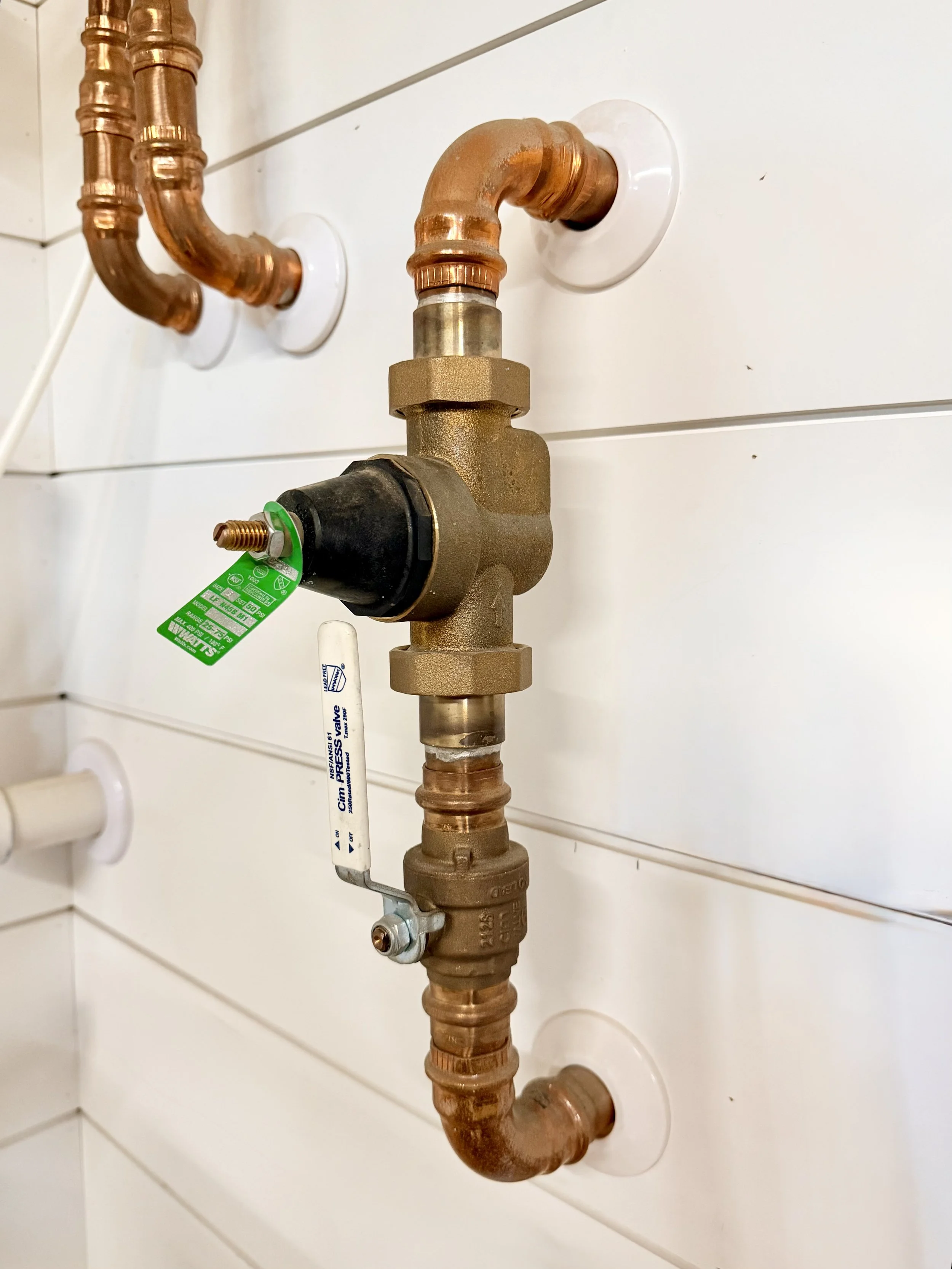
A properly selected and adjusted pressure-reducing valve (PRV) can help protect plumbing systems and maintain appropriate pressure.
Properties with separate irrigation systems may require different pressure settings for indoor plumbing and outdoor equipment.
Pressure should be evaluated based on the actual installation, equipment requirements, and local conditions rather than reduced indiscriminately.
For a closer look at how water pressure affects your plumbing, including the warning signs of a failing pressure-reducing valve, read our guide to pressure-reducing valves in Southern Utah.
What About Townhomes, Condominiums, Apartments, and HOAs?
Water billing can be more complicated for multifamily properties because the number of residences doesn't always match the number of municipal water connections.
A townhome or condominium with its own utility meter may be treated differently from an apartment building served by one master meter.
Likewise, a private submeter used to divide costs among tenants is not necessarily a separate connection recognized by the municipal utility.
The property's actual connection classification determines which thresholds and charges apply.
Individually Metered Residences
When a townhome, condominium, or similar residence has its own qualifying residential connection, the applicable residential surcharge schedule may apply to that individual meter.
The connection date remains an important factor.
Master-Metered Buildings
Apartment buildings and other multifamily properties served by a master meter require closer review.
The threshold may depend on the property's approved classification, meter arrangement, and utility records.
Property owners and managers should not assume that the building automatically receives a separate residential allowance for every unit.
HOA Common Areas and Amenities
HOAs may maintain landscaping, swimming pools, clubhouses, irrigation systems, and other shared facilities.
Some amenities may have separate meters or non-potable irrigation connections. Others may be served through a common potable meter.
Reviewing the actual metering arrangement can help an association understand where consumption occurs and how charges are assigned.
For larger properties, regular monitoring of common-area irrigation, underground lines, and mechanical equipment can help prevent avoidable expenses from being distributed across multiple homeowners.
How Do Water Penalty Gallons Apply to Businesses?
Commercial and other nonresidential properties are also subject to regional water surcharge thresholds, but their allowances are generally based on the size of the potable-water meter.
According to the district's published schedule: [4]
¾-inch meter: 36,000 gallons per month.
1-inch meter: 80,000 gallons per month.
1½-inch meter: 260,000 gallons per month.
2-inch meter: 420,000 gallons per month.
3-inch meter: 850,000 gallons per month.
4-inch meter: 1,400,000 gallons per month.
6-inch meter: 2,600,000 gallons per month.
8-inch meter: 4,200,000 gallons per month.
The regional surcharge rates generally follow the same pre-2023 and post-2023 connection-date distinction of $1 or $10 per additional 1,000 gallons, respectively.
A larger meter may support a higher threshold, but meter sizing is not simply a billing preference. It must be appropriate for the property's actual demand and approved by the utility, with applicable connection and impact-fee requirements.
A restaurant, office building, medical facility, hotel, retail center, or industrial property can have very different water requirements.
The relevant question is whether its approved service and plumbing systems appropriately support those operations.
For commercial properties, unnecessary consumption may result from malfunctioning equipment, pressure problems, underground leaks, irrigation faults, or plumbing systems that no longer match how the building is used.
Addressing those issues can improve operating predictability without compromising the services the business provides.
Why Do Residential and Commercial Water Limits Look So Different?
It's understandable that Washington County residents have questions about household water surcharges while seeing new golf courses, resorts, car washes, water parks, private lagoons, and other commercial or recreational developments throughout the region.
Those questions become especially relevant when households are managing seasonal thresholds and additional charges.
One important distinction is that not every property uses the same type of water supply.
Some facilities use secondary irrigation water or reclaimed water. Others use municipal drinking-quality water, private sources, or a combination of supplies. Their meter classifications, rates, and infrastructure arrangements may also differ.
Water used at a property isn't always equivalent to water permanently lost from the regional system. For example, some commercial processes return water to wastewater treatment systems, while evaporation and certain irrigation uses have different implications.
That doesn't resolve every question about development priorities, water allocation, or the fairness of a particular rate structure.
It does mean that visible water use alone doesn't establish how a facility is supplied or billed.
The district has also adopted additional review requirements for certain proposed large commercial, institutional, and industrial water users.
Under that policy, proposed developments with projected consumption of 9 million gallons or more annually require additional regional review. The threshold is 5 million gallons annually in La Verkin, Toquerville, and Virgin. [13]
For residents and businesses trying to understand their own bills, the most useful starting point remains the same: identify the water source, meter classification, applicable threshold, and actual consumption.
What If Your Water Bill Suddenly Increases?
An unexpected increase doesn't automatically mean your household has changed its habits or that you need to make major changes to your property.
It may reflect seasonal irrigation, a longer billing period, additional guests, or an actual change in consumption.
It can also indicate a plumbing problem.
Some of the most useful things to investigate include:
Underground water lines. A concealed leak can continue for an extended period before becoming visible at the surface, particularly in certain soil and landscape conditions.
Pressure-reducing valves. A failing or improperly adjusted PRV can affect pressure throughout the property and contribute to fixture or equipment problems.
Running toilets and leaking fixtures. Small, continuous flows can accumulate over an entire month without being particularly noticeable.
Irrigation valves and piping. A valve that doesn't fully close or a damaged underground line can increase consumption while the landscape appears relatively normal.
Pool autofill systems. An automatic fill valve can make a pool particularly deceptive when it comes to water consumption. Because the equipment continually replaces water as the level drops, a leak may go unnoticed while the additional gallons continue passing through the meter and accumulating on the bill.
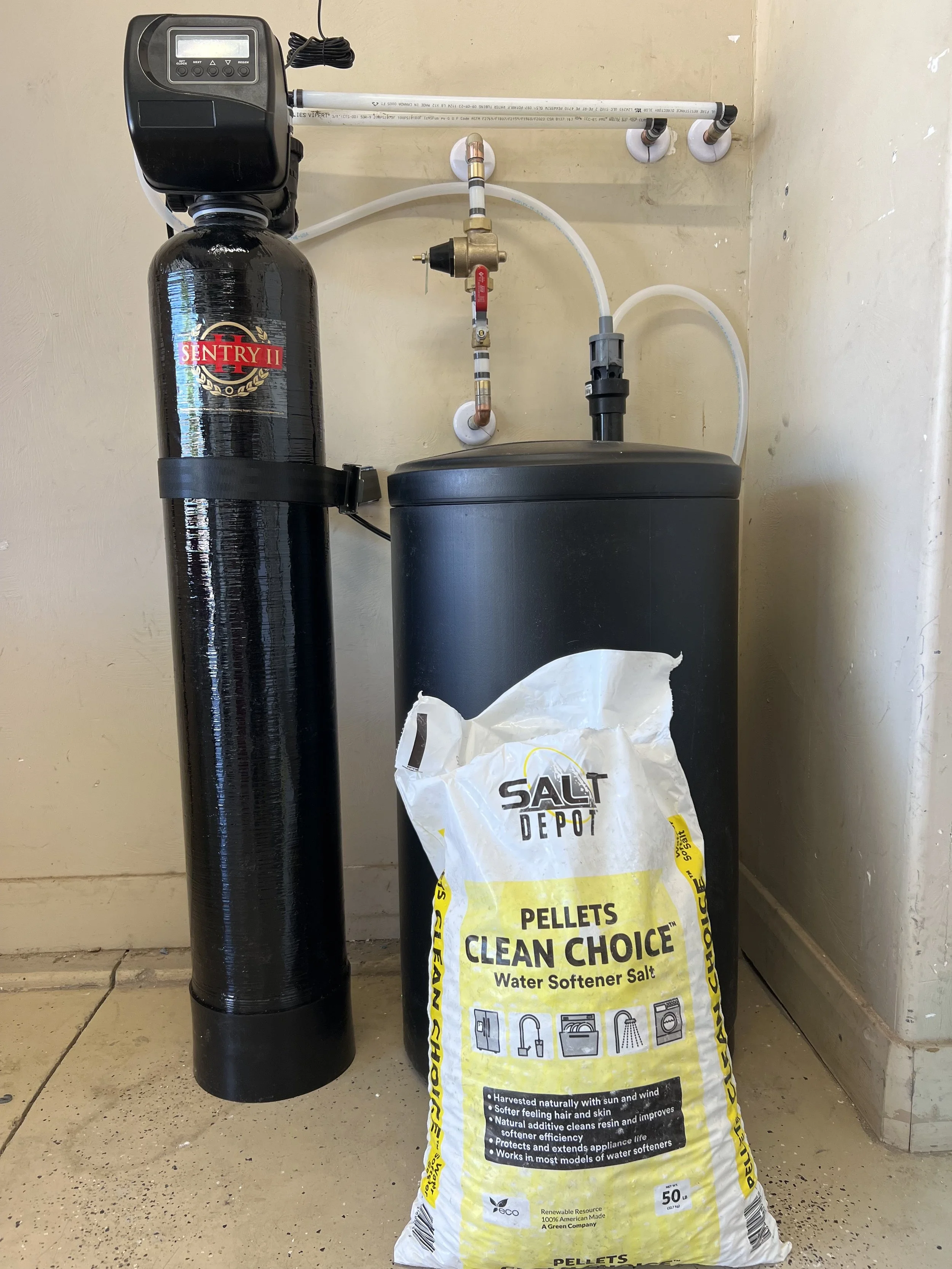
Water treatment equipment. A malfunctioning softener or filtration system may use more water than intended during certain operating cycles.
Before making expensive changes, compare recent meter readings and billing periods.
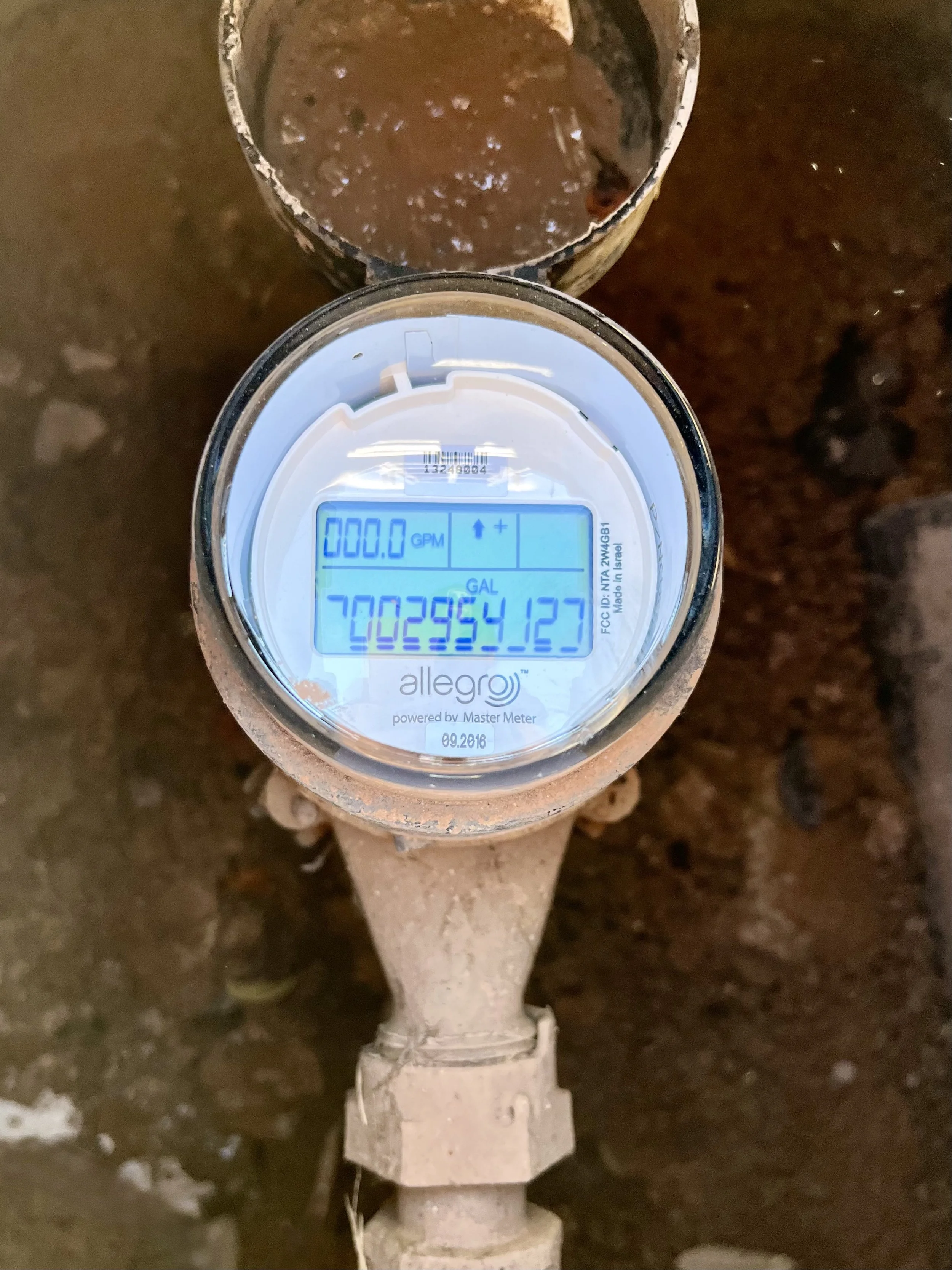
Some Washington County municipalities also offer smart-meter monitoring tools that can help identify continuous flow or unexpected increases.
If the increase remains unexplained, a targeted plumbing evaluation may help identify the cause.
When Is It Worth Having the Plumbing Checked?
If your consumption has increased without an obvious explanation, it may be worth looking beyond your household routines.
Artisan Plumbing provides plumbing diagnostics and repairs throughout Washington County, including evaluation of leaks, pressure problems, and malfunctioning plumbing equipment.
Identifying the cause can help you determine what, if anything, needs attention.
Underground Water Lines
Some underground leaks first become apparent through increased meter readings rather than visible water at the surface.
When a buried line is suspected, Artisan Plumbing can evaluate the plumbing and draw on Artisan Group's in-house excavation capabilities when access is needed for an appropriate repair.
That means plumbing and excavation can be approached as one coordinated scope rather than requiring the property owner to arrange separate contractors.
Learn more about our underground water and sewer line services.
Can a Water Leak Qualify for a Bill Adjustment?
Some utilities may offer leak-related adjustments under specific conditions, but eligibility, documentation, deadlines, and covered charges vary.
Toquerville, for example, advises residents who have repaired qualifying leaks to contact the utility department about possible billing abatements.
A municipal adjustment may not automatically remove a separate regional surcharge.
If you discover a significant leak, contact your utility promptly and retain documentation of the repair.
Practical Ways to Manage Water Costs Without Giving Up What You Enjoy
Water efficiency doesn't have to mean sacrificing comfort, landscaping, or the way you use your property.
Often, the most effective improvements involve correcting unnecessary losses and ensuring existing equipment operates as intended.
For homeowners, that may mean repairing a concealed leak, maintaining appropriate pressure, correcting irrigation coverage, or choosing fixtures that provide the performance they want with less water.
For businesses, it may mean monitoring equipment, maintaining commercial plumbing systems, or identifying abnormal consumption before it affects several billing cycles.
For HOAs and multifamily properties, it may mean reviewing shared meters, checking common-area systems, and establishing a clearer picture of where water is actually being used.
Not every improvement requires a major investment, and not every property needs the same solution.
The objective is to support the property's existing needs while making consumption as predictable and efficient as reasonably possible.
Choosing Fixtures Without Sacrificing Comfort
Modern plumbing fixtures offer a range of performance options.
A well-designed showerhead, toilet, faucet, or appliance can sometimes reduce water consumption without noticeably changing the experience of using it.
Plumbing fixture requirements also vary across the country.
For qualifying residential installations, Utah's applicable standards generally permit showerheads rated up to 2.0 gallons per minute and toilets using up to 1.6 gallons per flush.
Several other states and jurisdictions have lower maximum flow or flush requirements, including limits of 1.8 gallons per minute for showerheads and 1.28 gallons per flush for toilets. [14]
This gives Southern Utah homeowners additional flexibility in some fixture categories when balancing comfort, performance, and water consumption, subject to applicable codes.
More efficient fixtures remain available for those who prefer them.
Replacing functioning equipment solely to reduce consumption, however, isn't always the most economical first step.
Correcting a leak or pressure problem may deliver a more meaningful benefit.
Planning for Southern Utah's Water Future
Washington County continues to grow, and regional water infrastructure planning is expanding alongside that growth.
The Washington County Water Conservancy District's published plans include additional storage, new supply development, treatment capacity, pipelines, and water reuse facilities. [15]
One example is Chief Toquer Reservoir, a planned 3,725-acre-foot facility designed to store water from the Ash Creek system and reclaimed water.
Other planned investments include expansion of the Quail Creek Water Treatment Plant from approximately 60 million to 90 million gallons of daily treatment capacity, along with development of the Regional Reuse Purification System.
These projects are intended to improve the region's long-term water supply flexibility and reliability. Their benefits will depend on successful construction and implementation, along with applicable approvals and funding.
What Does Water Reuse Actually Mean?
Water reuse is another topic that raises understandable questions, particularly when residents hear about plans to expand recycled water systems.
There are important differences between reclaimed water used for irrigation and advanced purified water intended for drinking-water systems.
Some planned Washington County projects will deliver non-potable reclaimed water for secondary irrigation and agricultural uses, reducing demand on other supplies.
The district's longer-term purification plans also include advanced treatment processes designed to produce water meeting drinking-water standards before it enters designated regional storage and treatment facilities. [16]
These are distinct applications with different treatment requirements.
The projects are part of long-term regional infrastructure planning, not a proposal to deliver untreated wastewater directly to household taps.
For property owners, the most useful perspective is that regional water planning involves multiple supply sources and infrastructure investments, not simply household consumption limits.
Frequently Asked Questions About Water Penalty Gallons
Are water penalty gallons the same as my city's higher water-use tiers?
No. The regional surcharge is separate from municipal water rates and tiered charges. Both may affect the same monthly bill.
Why is my water bill different from someone else's in another city?
Cities have different monthly base charges, consumption tiers, and other utility fees. Two properties using the same amount of water may therefore pay different amounts.
Which Washington County cities have higher residential water rates?
At an illustrative 20,000 gallons per month, standard residential water charges are generally lower in Hurricane and relatively comparable in St. George, Santa Clara, and Washington City. Ivins, Toquerville, and La Verkin have higher published charges under their standard residential schedules. Actual bills depend on the service classification and other fees.
Does every newer home have an 8,000-gallon monthly threshold?
No. Many qualifying newer potable-only residential connections have seasonal thresholds ranging from 8,000 gallons in winter to 20,000 gallons in summer. Other connection classifications may have different arrangements.
Does the January 1, 2023, cutoff refer to when I purchased my house?
Not necessarily. The district's schedule refers to the applicable water connection classification and date. Confirm the property's utility records rather than relying solely on the purchase or construction date.
How much higher is the penalty for newer connections?
The regional excess-use rate is ten times higher: $10 per 1,000 gallons above the applicable threshold for newer connections, compared with $1 per 1,000 gallons for qualifying older connections. Newer residential connections also generally have lower thresholds.
Can a family of six have the same water threshold as a household of two?
Yes. The published regional residential schedule doesn't automatically increase the threshold based on household size.
Do HOA irrigation meters count toward each homeowner's allowance?
Not necessarily. The answer depends on the utility connection and metering arrangement. Separate common-area meters and privately allocated charges should be reviewed individually.
Do commercial properties have water penalty gallons?
Yes. Nonresidential potable-water connections have published thresholds based on meter size, with applicable regional surcharge rates.
Can high winter water use affect my sewer bill?
Depending on the municipality, yes. Washington City, for example, uses winter water consumption in its published sewer billing calculation.
Can I receive an adjustment for a water leak?
Some utilities may offer adjustments under qualifying circumstances. Policies vary, and municipal adjustments may not automatically eliminate regional surcharges.
Should I remove my lawn or change my landscaping to avoid penalties?
Not necessarily. Water-wise landscaping can offer substantial benefits, but it isn't the only option. Correcting leaks, pressure problems, and sprinkler coverage may help manage consumption while preserving an existing landscape.
What should I do if my usage seems unusually high?
Compare meter readings and recent bills, check for continuous flow when water isn't being used, and investigate fixtures, irrigation systems, and underground lines. If the cause isn't apparent, a plumbing evaluation can help identify potential problems.
Swimming Pools and Hot Tubs: How Much Water Do They Really Use?
A swimming pool or hot tub can be an important part of enjoying your home, particularly in Southern Utah, where outdoor living is possible much of the year.
With the right equipment and a few practical measures, maintaining these amenities may require considerably less ongoing water than many homeowners expect.
The key is understanding the difference between the water needed to initially fill a pool or spa and the amount it consumes during everyday operation.
Covered Swimming Pools: A Surprisingly Manageable Amount of Water
One of the most effective ways to reduce pool water consumption is to limit evaporation.
According to the U.S. Environmental Protection Agency, properly used solid pool covers can reduce evaporation by more than 90%, with reductions reaching approximately 95% under suitable conditions. [17]
Consider a residential swimming pool measuring 20 by 40 feet.
If that pool would otherwise lose approximately 3,000 gallons to evaporation during a particular month, a consistently used cover achieving a 95% reduction would bring that loss down to approximately 150 gallons.
To put that into perspective, 150 gallons is roughly equivalent to:
Nine eight-minute showers using a 2-gallon-per-minute showerhead.
Approximately two days of average residential water use for one person, using the EPA's national benchmark.
Less than 2% of an 8,000-gallon monthly surcharge threshold.
That's a useful comparison when evaluating how much a properly covered pool may contribute to monthly water consumption.
The 3,000-gallon starting point is an illustrative evaporation scenario, not a prediction for every pool. Evaporation varies with weather, temperature, wind exposure, and cover use.
A pool may also need water for splash-out, cleaning, filter maintenance, and other operations.
Automatic retractable covers, commonly installed on residential pools throughout Southern Utah, make it convenient to keep a pool covered when not in use.
These covers can also help retain heat and reduce debris accumulation.
For homeowners who enjoy having a swimming pool, reducing evaporation is a practical way to preserve that amenity while keeping ongoing water consumption more manageable.
What About a Covered Hot Tub?
Hot tubs can also be surprisingly modest water consumers, particularly when fitted with a properly insulated, well-sealed cover.
Many residential hot tubs hold approximately 300 to 500 gallons. Unlike swimming pools, hot tubs are periodically drained and refilled to maintain appropriate water quality.
Consider a 400-gallon hot tub that is drained and refilled every three months.
That represents approximately 1,600 gallons annually, or an average of 133 gallons per month for scheduled water replacement.
With a properly fitted cover, evaporation between uses may be relatively small, although there is no reliable universal monthly figure. Actual losses depend on water temperature, cover fit, frequency of use, wind exposure, and maintenance practices.
For perspective, 133 gallons is less than two days of average residential water consumption for one person, using the EPA's national benchmark.
The month in which a spa is drained and refilled will have a higher water demand than the annual monthly average.
Nevertheless, a properly maintained, consistently covered spa can have a relatively modest ongoing water requirement.
Keeping the Amenities You Enjoy While Managing Water Costs
For swimming pools and hot tubs, the amount of water contained in the system is not the same as the amount consumed each month.
Covers, properly functioning equipment, prompt leak repairs, and routine maintenance can make a substantial difference in how much replacement water is needed.
For Southern Utah homeowners, understanding these differences can help anticipate seasonal expenses and maintain the amenities they enjoy without unnecessary water loss.
Making the Most of Your Property Without Unnecessary Water Costs
Water is part of what makes a home comfortable, a landscape enjoyable, and a business functional.
Understanding the charges associated with that water shouldn't require homeowners to second-guess every ordinary activity or assume that maintaining the property they want is out of reach.
The most practical approach is to understand the rates and thresholds that apply to your connection, know what your property actually uses, and address avoidable losses before they become recurring expenses.
At Artisan Plumbing, our focus is on helping Southern Utah property owners maintain reliable plumbing systems and make informed decisions about their homes and businesses.
If your consumption seems unusually high, your water pressure has changed, or you suspect a plumbing problem, contact Artisan Plumbing to discuss what you're experiencing.
We're here to help you protect your investment, manage unnecessary costs, and keep your home or business operating as it should.
Sources and References
Water Consumption and Regional Surcharges
[1] Washington County Water Conservancy District. 2023 Regional Water Master Plan. Historical single-family residential meter data, 2018–2020.
https://www.wcwcd.gov/wp-content/uploads/2025/07/2023MasterPlanPublic.pdf
[2] U.S. Environmental Protection Agency. WaterSense: Statistics and Facts. National residential water-use estimates.
https://www.epa.gov/watersense/statistics-and-facts
[3] City of Phoenix Water Services. Residential Water Conservation Resources. Household water use and property-related demand.
https://www.phoenix.gov/waterservices
[4] Washington County Water Conservancy District. Water Rates and Excess Water Use Surcharge. Residential and commercial thresholds and direct-customer rates.
https://wcwcd.gov/rates/
Municipal Water Rates
[5] City of St. George. FY 2027 Adopted Master Fee Schedule, July 16, 2026.
https://cms3.revize.com/revize/stgeorge/Documents/Departments/Budget/2027%20Budget%20Files/2026.07.16%20%20Adopted%20FY27%20Master%20Fee%20Schedule.pdf
[6] Washington City. Master Utility Fee Schedule. Residential water rates, conservancy fees, and sewer calculations.
https://washingtonutah.gov/services/utilitybilling/utilityfeeschedule
[7] Hurricane City. Residential Utility Rates, effective July 1, 2026.
https://www.cityofhurricane.com/DocumentCenter/View/2708/Utility-Rates-as-of-7-1-2026?bidId=
[8] Ivins City. Residential Utility Rates, effective March 1, 2026.
https://ivinsutah.gov/wp-content/uploads/2026/02/Welcome-Packet-2026.pdf
[9] Santa Clara City. Utilities and Water Rates, effective July 1, 2026.
https://www.santaclarautah.gov/departments/administration/utilities/
[10] La Verkin City. Consolidated Fee Schedule, updated March 18, 2026.
https://www.laverkin.gov/sites/g/files/vyhlif14606/files/media/administration/file/1986/2026-03-18%20Fee%20Schedule.pdf
[11] Toquerville City. 2026 Uniform Fee Schedule. Residential culinary-water and irrigation classifications.
https://www.utah.gov/pmn/files/1392503.pdf
[12] Virgin Town. Published Residential and Commercial Water Rates.
https://www.utah.gov/pmn/files/1444211.pdf
Regional Planning, Plumbing Standards, and Pools
[13] Washington County Water Conservancy District. High-Water-Use Policy. Regional review of proposed large commercial, institutional, and industrial water users.
https://wcwcd.gov/achievements/
[14] Plumbing Manufacturers International. Summary of Current Plumbing Provisions. Comparison of state plumbing fixture requirements.
https://www.safeplumbing.org/technical/pmi-summary-of-current-plumbing-provisions
[15] Washington County Water Conservancy District. Current Water Infrastructure Projects. Reservoirs, treatment capacity, and planned improvements.
https://wcwcd.gov/current-projects/
[16] Washington County Water Conservancy District. Regional Reuse Purification System.
https://wcwcd.gov/reuse/
[17] U.S. Environmental Protection Agency. Pool Water Efficiency. Pool cover effectiveness and reducing evaporation.
https://www.epa.gov/watersense/pool-water-efficiency
Prepared by Artisan Plumbing | Water rates and sources reviewed October 25, 2026.
Rate examples are based on published schedules and common residential classifications. Actual charges may vary based on meter size, service classification, separate irrigation systems, utility fees, and subsequent changes. Contact your provider to verify the rates applicable to your account.
Water Pressure Reducing Valves (PRVs): Protecting Plumbing & Preventing Costly Repairs in Southern Utah
Excessive water pressure can silently damage plumbing, appliances and irrigation systems. Learn how pressure reducing valves work, why they fail and how proper regulation protects your property from unnecessary repairs.
Water pressure is something most people rarely think about until something changes. A shower suddenly feels stronger or weaker, a plumbing fixture begins leaking, or an appliance valve fails without an obvious explanation.
But water pressure affects far more than everyday comfort. Excessive pressure can place unnecessary stress on plumbing fixtures, appliances, water heaters, supply lines and other components throughout a property. Over time, that stress can contribute to premature failures, recurring repairs and potentially expensive water damage.
Think of a pressure reducing valve (PRV) like the controlled gates of a dam. There may be considerable pressure behind the water upstream, but that doesn't mean everything downstream should receive the full force. A PRV works on a similar principle, regulating the pressure delivered to a plumbing system rather than allowing excessive incoming pressure through.
There's also something many property owners don't realize: a PRV can stop regulating pressure properly without producing obvious symptoms. Water may continue flowing normally while plumbing components are exposed to higher pressure than intended.
And even when a building has a functioning regulator, that doesn't necessarily mean every water line on the property is protected.
Understanding how water pressure works, why it changes and how to maintain appropriate pressure can help protect plumbing systems, extend the useful life of equipment and reduce preventable maintenance costs.
For homes, rental properties, commercial buildings and managed facilities throughout Southern Utah, pressure regulation is an important part of long-term property maintenance.
Explore This Guide
Understanding water pressure, protecting your plumbing, and maintaining your property's pressure regulation.
Understanding Water Pressure
Protecting Your Property
What Is a Pressure Reducing Valve (PRV)?
A pressure reducing valve is a mechanical device that reduces higher incoming water pressure to a more appropriate level for the plumbing system or equipment it supplies.
Most residential and light commercial PRVs contain internal components, typically including a spring and diaphragm, that respond to changes in downstream pressure.
When properly selected and installed, the regulator helps maintain its intended downstream pressure despite reasonable fluctuations in the incoming supply.
The goal isn't to create weak water pressure. It's to provide enough pressure for fixtures and appliances to operate effectively without exposing the plumbing to unnecessary stress.
PRVs are commonly installed near the point where a main water service enters a building, although their location varies depending on the plumbing configuration.
Some are readily accessible. Others may be located in utility rooms, valve boxes or less obvious portions of the plumbing system.
What Is the Ideal Water Pressure?
For most residential properties, approximately 50–60 pounds per square inch (psi) is a practical target for household water pressure.
The U.S. Environmental Protection Agency's WaterSense program recommends incoming residential service pressure between 45 and 60 psi for efficient operation of household fixtures and appliances. [1]
The EPA's WaterSense Technical Reference Manual also identifies excessive pressure as a contributing factor in unnecessary water consumption, premature equipment failure and plumbing leaks. [2]
Higher pressure isn't necessarily better.
Although strong water pressure may feel desirable at a faucet or shower, fixtures and appliances are designed to function within appropriate operating ranges.
For commercial properties, larger buildings and specialized equipment, the appropriate pressure may differ depending on building height, fixture demands and system design.
If 50–60 PSI Is Recommended, Why Does Plumbing Code Allow 80 PSI?
This is an important distinction.
Under Utah's adopted plumbing code, static water pressure exceeding 80 psi within a building generally requires an approved pressure reducing valve to bring the pressure within the permitted limit, subject to applicable provisions and exceptions. [3]
However, 80 psi is a code threshold, not an ideal operating target.
A property receiving 75 psi may be below that threshold while still operating at a higher pressure than necessary for its plumbing components.
Maintaining appropriate pressure helps limit unnecessary stress on valves, seals, connections and other components throughout the system.
The correct setting depends on the building's water supply, plumbing configuration, fixture requirements and actual water demand.
Why Excessive Water Pressure Can Become Expensive
High water pressure doesn't always cause one dramatic plumbing failure.
More often, the concern is the additional stress placed on components over time.
Excessive pressure can contribute to premature wear or failure of:
Faucet cartridges, seals and internal valves
Toilet fill valves and supply connections
Washing machine and dishwasher inlet valves
Flexible appliance supply lines
Water heater connections and associated components
Shutoff valves and plumbing fittings
Water supply piping and connections
A single leaking fixture doesn't automatically indicate a pressure problem.
However, when several components develop similar issues, fixtures fail repeatedly or plumbing repairs seem unusually frequent, water pressure is worth investigating.
For example, replacing a failed toilet fill valve may correct the immediate problem. But if excessive supply pressure contributed to the failure, replacing the valve doesn't address the underlying condition.
The visible failure isn't always the original cause.
The Financial Value of Proper Pressure Regulation
One of the most practical reasons to maintain appropriate water pressure is the potential cost of leaving a correctable problem unresolved.
Repeatedly replacing fixtures, appliance connections or plumbing valves can become expensive through replacement parts, labor and recurring service calls.
Some failures also have consequences beyond the plumbing component itself.
A leaking supply connection can damage cabinetry, flooring, drywall and surrounding materials. Depending on the location and severity, repairing that damage may become substantially more involved than correcting the original plumbing issue.
Excessive pressure isn't responsible for every failure, and pressure regulation cannot eliminate all plumbing risks.
However, when excessive pressure is contributing to repeated problems, correcting it can be a relatively modest investment compared with the cost of continued repairs or more extensive damage.
Proper pressure management may also reduce unnecessary water consumption and help plumbing components reach their intended service life. [1][2]
This is why preventive maintenance matters. Identifying an underlying condition before it causes repeated failures is often more economical than continuing to repair its consequences.
Can a Pressure Reducing Valve Fail Without You Knowing?
Yes. A PRV can deteriorate gradually without an obvious external leak or noticeable change in everyday water use.
This is one of the most important things to understand about pressure regulators.
Because a PRV is a mechanical device, its internal components can wear, deteriorate or become affected by mineral deposits and debris.
Some regulators begin allowing downstream pressure to rise above the intended setting. Others become restricted or fail to maintain adequate pressure when multiple fixtures are operating.
A homeowner, tenant or property manager may not notice either condition immediately.
A shower can still feel normal. Faucets may continue operating, and there may be no visible sign that the regulator is malfunctioning.
Meanwhile, the plumbing system may no longer be receiving the pressure it was intended to handle.
What Is Pressure Creep?
One possible sign of a deteriorating regulator is a condition known as pressure creep.
This occurs when downstream pressure gradually increases above the regulator's intended setting while water is not flowing.
For example, a regulator intended to maintain approximately 55 psi may initially appear to be working correctly, but a pressure gauge may reveal that downstream pressure slowly increases after the fixtures are turned off.
This can occur when internal components no longer seal or regulate correctly.
Manufacturer guidance from Zurn Wilkins specifically describes using downstream pressure measurements to evaluate regulator performance and identify improper pressure control. [4]
However, rising downstream pressure doesn't automatically mean the PRV has failed.
Thermal expansion from a water heater can also increase pressure within a closed plumbing system. These conditions need to be distinguished through appropriate testing.
Signs That a PRV May Be Failing
Possible warning signs include:
Gradually increasing water pressure
Unexpected pressure fluctuations
Reduced pressure or flow when multiple fixtures operate
Repeated leaks or premature fixture failures
Plumbing noises associated with pressure changes
Pressure readings that exceed the intended regulator setting
The absence of these symptoms doesn't guarantee that a PRV is working correctly.
A regulator can lose effectiveness before the change becomes noticeable during everyday use.
This is why periodic pressure testing is useful, particularly on properties with aging regulators, repeated plumbing failures or a history of pressure-related issues.
How Does a Plumber Determine Whether a PRV Is Working?
A PRV can't be evaluated reliably based solely on its appearance or how strong the water feels at a faucet.
A plumber can assess the regulator by measuring water pressure, inspecting the existing installation and evaluating how the system responds under different operating conditions.
Depending on the plumbing configuration and symptoms, an evaluation may include measuring incoming supply pressure, checking static pressure downstream of the regulator, observing pressure while fixtures are operating and monitoring for unexpected pressure increases.
The regulator itself may also be inspected for leaks, deterioration, accessibility and signs of improper operation.
Static Pressure vs. Pressure Under Flow
Static pressure is measured when water is not flowing.
Pressure under flow is measured while fixtures or equipment are operating.
Both provide useful information.
A building may have acceptable static pressure but experience a significant pressure drop when several fixtures are used simultaneously.
That can indicate a restriction, an improperly sized regulator, a supply issue or another condition affecting available flow.
Conversely, the system may appear to perform normally while water is flowing but experience excessive pressure when fixtures are closed.
Why the Testing Location Matters
Not every water outlet on a property is necessarily connected downstream of the same regulator.
Some exterior hose connections are supplied before the building's PRV. Testing one of those outlets may reveal incoming supply pressure rather than the pressure delivered to the interior plumbing.
A property may also have separate irrigation supplies, independently regulated buildings or different pressure zones.
A meaningful evaluation identifies which portion of the system is being tested.
The objective is to determine what the plumbing system is actually doing before deciding whether the PRV requires adjustment, repair or replacement.
Why Water Pressure Can Change Over Time
Water pressure isn't necessarily constant throughout the life of a building.
Some changes originate within the property. Others involve the infrastructure supplying it.
New Developments and Neighborhood Growth
As communities expand, utilities may extend distribution lines, establish new connections, add pumping capacity or modify pressure zones to accommodate additional demand.
These improvements are generally designed to maintain reliable service, but changes to distribution infrastructure can influence the pressure and flow conditions experienced by existing properties.
New construction doesn't automatically cause higher or lower pressure.
However, in growing communities throughout Washington County, it's worth recognizing that the infrastructure serving a property may change over time even when nothing inside the building has been modified.
Water Main Repairs and Utility Construction
Water main repairs, infrastructure replacement, hydrant use, valve adjustments and other utility operations can temporarily affect water pressure.
Depending on the work, occupants may notice reduced flow, fluctuations or a change in normal supply conditions.
Municipal utilities also identify elevation, distribution conditions and problems within private plumbing as possible causes of pressure differences. [5]
If several neighboring properties experience the same sudden change, the cause may be outside the individual buildings.
If only one property is affected, the plumbing or equipment serving that property deserves closer evaluation.
Seasonal Demand and Time of Day
Water demand changes throughout the day and year.
Morning and evening household use, summer irrigation demand and periods of unusually high consumption can affect the pressure available while water is flowing.
Supply pressure may also be higher during periods of lower demand.
A properly operating PRV helps regulate downstream pressure when incoming pressure varies within the device's operating limits.
It cannot, however, increase pressure when the incoming supply is insufficient.
Changes Within the Property
Pressure and flow problems can also originate from aging regulators, partially closed shutoff valves, leaking water lines, mineral deposits, restrictions, changes to water treatment equipment or increased plumbing demand.
For properties with private water supplies, pump controls and pressure tanks may also be involved.
A sudden pressure change should be investigated rather than automatically attributed to a failed PRV.
Are PRVs Only Used With Municipal Water?
No. Pressure regulation is relevant to many types of water supplies.
The important consideration is whether the system delivers pressure appropriate for the plumbing or equipment connected to it.
Municipal and Community Water Systems
Municipal distribution systems use combinations of pumps, storage tanks, pressure zones and elevation to deliver water.
Depending on the location of a property, incoming pressure may be higher than its plumbing should receive.
A PRV can reduce that pressure to a more appropriate operating level.
Private Wells and Pumped Systems
Private wells commonly rely on pumps, pressure tanks and pressure switches to maintain water pressure.
These systems already incorporate pressure management, but additional regulation may be appropriate in some configurations.
Properties using higher pump pressures, booster equipment or separate branches serving equipment with lower pressure requirements may need additional controls.
A PRV is not a replacement for a properly configured pressure tank, pressure switch or pump control system.
Gravity-Fed Storage and Other Water Sources
Water supplied from elevated storage tanks or gravity-fed systems may also require pressure regulation.
The elevation difference between the source and the plumbing can create substantial pressure at lower points in the system.
Conversely, a supply with insufficient pressure may require pumping rather than pressure reduction.
The same principles can apply to agricultural supplies, separately supplied buildings and certain commercial systems.
Pressure regulation depends on the operating conditions of the water supply, not simply whether the water comes from a city connection, well or storage tank.
Why Some Properties Need More Than One PRV
A single pressure reducing valve doesn't necessarily protect every part of a property.
A building may have one regulator protecting its interior plumbing while an outdoor water line, detached structure or irrigation connection receives water before that regulator.
Those separately supplied portions of the property may require their own pressure control.
When a House PRV Doesn't Protect the Irrigation System
One configuration encountered on Southern Utah properties involves an irrigation line that branches from the main water supply before the home's PRV.
The interior plumbing may be operating at a comfortable 55 psi while the irrigation system receives significantly higher incoming pressure.
This can create repeated problems outside even when everything inside the home appears normal.
Excessive irrigation pressure can cause drip emitters to pop off, tubing and lines to split, fittings to leak, sprinkler heads to break and irrigation valves to fail prematurely.
Importantly, these failures can occur even when components are relatively new.
A new emitter, fitting or valve isn't necessarily defective simply because it fails. It may be receiving pressure higher than its intended operating range.
Utah State University Extension specifically identifies drip emitters being forced off tubing by excessive pressure and recommends pressure regulation where appropriate. [6]
When irrigation components continue failing, replacing them without evaluating the water pressure may leave the original problem unresolved.
Should an Irrigation PRV Be Set Lower Than a House PRV?
Often, yes, although the correct setting depends on where the regulator is installed and what equipment it supplies.
Many irrigation components are designed to operate at lower pressures than typical household plumbing.
Research from Oklahoma State University Extension identifies the following approximate optimal operating pressures: [7]
Household plumbing: Commonly around 50–60 psi
Conventional spray heads: Approximately 30 psi
Rotary sprinklers: Approximately 45 psi
Drip irrigation: Approximately 20 psi
These figures are general guidelines. Actual equipment specifications should determine the appropriate pressure.
There is also an important distinction between the pressure supplied to an entire irrigation system and the pressure required at an individual sprinkler head or emitter.
Water loses pressure as it moves through piping, valves, backflow assemblies and changes in elevation.
For example, a rotor system might require approximately 45 psi at the sprinkler heads but need a higher pressure setting at the supply regulator to compensate for losses through the piping.
An irrigation supply PRV may therefore be set lower than the house PRV, at a similar pressure or occasionally higher, depending on the equipment and system design.
For systems containing multiple irrigation zones, additional pressure regulation may be needed at individual valves or components.
The objective is not simply to turn the irrigation pressure down as far as possible. It's to provide the correct pressure where the equipment operates.
Can an Irrigation PRV Be Added to an Existing System?
Yes. In many cases, a dedicated pressure regulator can be installed on an existing irrigation supply without rebuilding the entire installation.
When the supply piping is accessible and there's adequate space, this may be a relatively straightforward plumbing modification.
Other installations may require exposing underground piping, modifying connections or providing an accessible location for future maintenance.
A regulator installed on the irrigation supply can help protect downstream irrigation piping and valves from excessive pressure, while regulation only at individual sprinkler heads doesn't necessarily protect those other components.
This is particularly important when repeated failures involve supply lines, fittings or valves rather than the sprinkler heads themselves.
When a modification involves buried piping, access and the condition of the existing underground water lines can influence the work required.
Other Water Lines That May Need Separate Regulation
Depending on the property, additional pressure control may also be appropriate for exterior hose connections, detached garages, workshops, guesthouses, separate irrigation supplies, landscape water features or equipment with specialized pressure requirements.
Not every branch requires its own PRV.
If a water line already receives appropriately regulated water, another regulator may be unnecessary.
The goal is to ensure that each part of the system receives suitable pressure for its intended use.
Pressure regulation should also not be confused with backflow prevention. A PRV controls pressure, while a backflow prevention assembly protects against reverse flow and potential contamination of the water supply.
Pressure Regulation for Commercial and Managed Properties
The same principles apply to commercial buildings, multifamily properties, rental portfolios, HOAs and other managed facilities.
Larger properties may have more complicated water distribution systems, including separate service connections, multiple floors, pressure zones, landscape irrigation systems and equipment with different operating requirements.
A single regulator may not be sufficient for every application.
Commercial plumbing systems also have to accommodate actual demand. Pressure that is appropriate at one fixture may not be adequate for equipment located at a higher elevation or farther from the supply.
Proper regulator selection and placement help balance adequate flow with protection against excessive pressure.
For property managers and building owners, preventive pressure maintenance can also have broader financial implications.
A failed supply connection in a multifamily building or commercial space may affect multiple occupants, interrupt operations or damage neighboring areas.
Recurring fixture and valve failures can also create unnecessary maintenance expenses across an entire property or portfolio.
Evaluating water pressure as part of routine property maintenance can help identify a systemwide issue before it leads to repeated work orders or larger repairs.
The same diagnostic approach applies whether a problem involves one residential fixture or a more complicated commercial plumbing system: measure the pressure, understand the configuration and identify the cause before recommending a repair.
Water Pressure Considerations in Southern Utah
Elevation changes, continued development and differences in water distribution infrastructure can create significantly different pressure conditions throughout Washington County.
A property in St. George may receive different pressure than one in Hurricane, Washington, Ivins or Santa Clara.
Even properties within the same neighborhood may have different plumbing configurations or pressure-regulation arrangements.
Washington City
Washington City's Rules for Water Service explain that water pressure varies throughout the municipal distribution system.
Section 2.1 places responsibility for privately owned pressure regulators on property owners and requires owner-installed and maintained pressure reducing valves on water connections. [8]
The rules also acknowledge that the City may adjust distribution pressure as necessary.
Understanding both the supply pressure and the condition of the individual regulator is therefore important for properties connected to Washington City's system.
Hurricane City
Hurricane City's Design and Construction Standards address secondary pressure reduction in designated high-pressure zones.
Section 3.6.5.1 requires building owners to install secondary pressure reducing devices on connections to buildings within designated zones where pressure exceeds 80 psi. [9]
The City identifies the locations of these high-pressure zones through its water system owner.
These requirements reinforce why individual service conditions matter when evaluating pressure regulation.
St. George and Surrounding Communities
Similar pressure-management considerations apply throughout St. George, Ivins, Santa Clara, La Verkin and other Washington County communities.
Individual service elevations, water distribution infrastructure and the property's own plumbing determine the conditions that need to be evaluated.
Rather than assuming an entire neighborhood has unusually high pressure, the more useful starting point is measuring the actual pressure at the property.
PRVs, Water Heaters and Thermal Expansion
Pressure reducing valves also have an important relationship with water heating systems.
When water is heated, it expands.
In a closed plumbing system, the additional water volume cannot move backward into the incoming supply.
Certain PRVs, check valves and backflow prevention devices can create these closed-system conditions.
As water heats, thermal expansion can increase pressure within the plumbing system even when the incoming regulator is functioning correctly.
Watts Water Technologies explains how closed plumbing systems can develop excessive pressure from thermal expansion and why appropriate expansion control is important. [10]
A properly sized potable-water expansion tank is one common solution.
A PRV and expansion tank serve different functions:
PRV: Regulates incoming supply pressure.
Expansion tank: Accommodates increased water volume created during heating in a closed system.
A water heater's temperature and pressure relief valve is an important safety device and should not be relied upon for routine thermal expansion control.
If a water heater's relief valve is discharging, the cause should be evaluated rather than assuming the PRV needs replacement.
This relationship is also worth considering during water heater installation, repair and replacement, when the equipment and surrounding plumbing conditions need to be evaluated together.
Water Pressure Regulation as Preventive Maintenance
Maintaining appropriate water pressure is one of the less visible ways to protect a property's plumbing.
Fixtures, appliances, valves, water heaters and their connections represent a substantial investment, both individually and collectively.
When pressure is properly controlled, those components are less likely to experience unnecessary stress associated with excessive supply pressure.
The potential benefits include fewer pressure-related repairs, reduced unnecessary water consumption, protection for plumbing equipment and a lower risk of certain leaks.
These aren't guarantees that equipment will never fail. Plumbing components still wear out, and leaks can develop for many reasons.
The value of preventive maintenance is identifying conditions that can reasonably be corrected before they contribute to larger problems.
How Often Should Water Pressure Be Checked?
There isn't one testing interval appropriate for every property.
However, including a pressure check in routine plumbing maintenance is a sensible practice.
Additional testing may be worthwhile when a property has an aging regulator, recurring fixture failures, unexplained pressure changes or recent modifications to its water supply.
Testing can also be helpful after substantial plumbing work or when surrounding utility infrastructure has changed.
Keeping a record of pressure readings provides a useful baseline for future comparison.
For many properties, the objective isn't to create another complicated maintenance task. It's to confirm that the system is operating within an appropriate range and identify any problems that warrant attention.
Pressure testing fits naturally alongside other preventive measures, including accessible shutoff valves, leak inspections and the seasonal maintenance considerations covered in our Southern Utah fall plumbing maintenance guide.
How Long Does a PRV Last?
A pressure reducing valve can provide many years of service, but there isn't one guaranteed lifespan.
Actual longevity depends on incoming pressure, water quality, operating conditions, the regulator's construction and internal component wear.
Mineral deposits and debris can also affect performance.
An older regulator may continue functioning correctly, while a newer regulator can develop problems.
Age alone doesn't establish that a PRV needs replacement. Its actual performance matters more.
Because a regulator can deteriorate without obvious symptoms, checking the water pressure periodically can help identify problems before they become apparent through failed fixtures or recurring leaks.
Should You Adjust, Repair or Replace a PRV?
Not every pressure problem requires a new regulator.
Depending on the valve's design, condition and available service parts, adjustment, maintenance or repair may be appropriate.
Other situations warrant replacement.
Sometimes the existing PRV is functioning correctly and the actual issue involves a different part of the plumbing system.
For example, high downstream pressure may be caused by a regulator that no longer controls pressure effectively. Low pressure may originate from a restriction or supply issue. Pressure increases during water heating may involve thermal expansion, while repeated outdoor plumbing failures may involve a separately supplied, unregulated water line.
A proper evaluation helps distinguish between those conditions.
The most economical solution isn't necessarily replacing the regulator, and it isn't necessarily leaving it alone. It's identifying what the system actually needs.
Unnecessary replacement costs money, but repeatedly repairing damage caused by a correctable pressure problem can also become expensive.
The objective is to make informed maintenance decisions based on actual measurements, equipment condition and system performance.
Frequently Asked Questions About Pressure Reducing Valves
What PSI should water pressure be?
Approximately 50–60 psi is a practical target for many residential plumbing systems. EPA WaterSense recommends incoming residential service pressure between 45 and 60 psi, although commercial buildings and specialized equipment may have different requirements. [1]
Can a PRV fail without obvious symptoms?
Yes. A regulator can gradually lose its ability to maintain the intended pressure without leaking externally or noticeably affecting everyday water use. Pressure testing can help identify a problem that isn't otherwise apparent.
Can maintaining a PRV help prevent expensive plumbing repairs?
Yes. When excessive pressure is contributing to premature wear or recurring failures, correcting that pressure can help reduce unnecessary repairs and the risk of certain leaks. Proper pressure regulation doesn't prevent every plumbing problem, but it can address conditions affecting multiple components throughout a system.
Can high water pressure damage new plumbing or irrigation equipment?
Yes. New components can still fail when exposed to pressure exceeding their intended operating limits. Excessive pressure may contribute to leaking fittings, damaged seals, failed valves, split irrigation tubing and other problems.
Does an irrigation PRV usually have a lower setting than a house PRV?
Often, but not always. Many irrigation components require lower operating pressure than household plumbing. However, the correct setting at the irrigation supply depends on equipment requirements, pipe friction, elevation changes and other pressure losses.
Can construction or new developments change water pressure?
Potentially. Changes to utility infrastructure, distribution connections, pressure zones and water demand can influence pressure or flow conditions. However, development doesn't automatically cause a pressure problem, and changes should be investigated rather than assumed.
Does a private well need a PRV?
Not necessarily. Many well systems manage pressure through pumps, pressure tanks and switches. Additional regulation may be appropriate for systems operating at higher pressures or serving equipment with different requirements.
Can a PRV be added to an existing property?
Yes. Pressure reducing valves can often be installed or replaced on existing plumbing systems. The work required depends on the piping configuration, accessibility and pressure-control requirements.
Is a PRV the same as a backflow preventer?
No. A PRV regulates water pressure. A backflow prevention assembly protects against reverse flow and potential contamination. Some plumbing systems require both.
Protecting Your Plumbing Starts With Understanding Your Water Pressure
A pressure reducing valve is a relatively small component, but its performance can affect plumbing throughout an entire property.
Homes, commercial buildings and managed properties represent substantial investments. So do the plumbing fixtures, appliances, water heaters, supply lines and other systems that serve them.
Protecting those systems isn't simply about responding when something breaks. It's also about identifying conditions that contribute to avoidable damage and addressing them before they create larger problems.
Excessive water pressure may contribute to premature fixture failures, leaking connections, damaged equipment, unnecessary water consumption and recurring repair costs.
In some cases, those effects develop gradually, and a failing regulator may go unnoticed without pressure testing.
It's also possible for a building to have properly regulated interior plumbing while separate water lines remain exposed to excessive pressure.
Maintaining appropriate water pressure is a practical part of protecting property, extending the useful life of plumbing components and reducing the likelihood of preventable expenses.
For homeowners, rental property owners, property managers and commercial facility operators, the important step is understanding the water supply, identifying how the system is configured and determining whether each portion receives appropriate pressure.
Sometimes that means adjusting or replacing a failing regulator. Sometimes it means adding pressure regulation to a separate supply. And sometimes it simply means confirming that the existing system is operating as intended.
Artisan Plumbing provides residential and commercial water pressure testing, PRV installation and replacement, plumbing diagnostics and related water system services throughout St. George, Washington, Hurricane, Ivins, Santa Clara and surrounding Washington County communities.
Our approach is to identify what's happening, explain what we find and help property owners make informed decisions about repairs and preventive maintenance.
For questions about your property's water pressure or existing regulator, you can contact Artisan Plumbing.
Sources & Technical References
[1] U.S. Environmental Protection Agency. WaterSense — Home Maintenance. Residential service pressure recommendations of 45–60 psi, fixture performance, conservation and preventive maintenance.
[2] U.S. Environmental Protection Agency. Technical Reference Manual for WaterSense Labeled Homes, 2023. Service Water Pressure section, addressing pressure regulation, equipment protection, multiple water supplies and water efficiency.
[3] State of Utah. 2024 International Plumbing Code, as Adopted and Amended by Utah, effective July 1, 2026. Section 604.8, Water Pressure Reducing Valve or Regulator.
[4] Zurn Wilkins. Frequently Asked Questions & Technical Support. Manufacturer guidance on pressure reducing valve testing, downstream pressure measurements and regulator troubleshooting.
[5] Portland Water Bureau. Troubleshooting Water Pressure and Flow. Municipal utility guidance addressing pressure variation, elevation, distribution conditions and private plumbing problems.
[6] Utah State University Extension. Irrigation System Maintenance, 2021. Guidance addressing excessive pressure, drip emitter failures and irrigation pressure regulation.
[7] Moore, Kevin, and Moss, Justin Quetone. Managing Pressure in the Home Irrigation System. Oklahoma State University Extension, Fact Sheet HLA-6617, March 2019. Research-based guidance on irrigation equipment pressure requirements, distribution losses and pressure-regulation methods.
[8] Washington City, Utah. Rules for Water Service. Section 2.1, Water Pressure, page 19. Requirements concerning privately owned pressure regulators and property owner responsibilities.
[9] Hurricane City, Utah. Standards for Design and Construction, updated June 3, 2026. Section 3.6.5.1, Secondary Pressure Reducing Valves. Requirements for building connections within designated high-pressure zones.
[10] Watts Water Technologies. Thermal Expansion. Manufacturer technical guidance explaining closed plumbing systems, pressure regulation and thermal expansion protection.
Last reviewed: October 2026.Water Pressure Reducing Valves (PRVs): Protecting Plumbing & Preventing Costly Repairs in Southern Utah
Water pressure is something most people rarely think about until something changes. A shower suddenly feels stronger or weaker, a plumbing fixture begins leaking, or an appliance valve fails without an obvious explanation.
But water pressure affects far more than everyday comfort. Excessive pressure can place unnecessary stress on plumbing fixtures, appliances, water heaters, supply lines and other components throughout a property. Over time, that stress can contribute to premature failures, recurring repairs and potentially expensive water damage.
Think of a pressure reducing valve (PRV) like the controlled gates of a dam. There may be considerable pressure behind the water upstream, but that doesn't mean everything downstream should receive the full force. A PRV works on a similar principle, regulating the pressure delivered to a plumbing system rather than allowing excessive incoming pressure through.
There's also something many property owners don't realize: a PRV can stop regulating pressure properly without producing obvious symptoms. Water may continue flowing normally while plumbing components are exposed to higher pressure than intended.
And even when a building has a functioning regulator, that doesn't necessarily mean every water line on the property is protected.
Understanding how water pressure works, why it changes and how to maintain appropriate pressure can help protect plumbing systems, extend the useful life of equipment and reduce preventable maintenance costs.
For homes, rental properties, commercial buildings and managed facilities throughout Southern Utah, pressure regulation is an important part of long-term property maintenance.
What Is a Pressure Reducing Valve (PRV)?
A pressure reducing valve is a mechanical device that reduces higher incoming water pressure to a more appropriate level for the plumbing system or equipment it supplies.
Most residential and light commercial PRVs contain internal components, typically including a spring and diaphragm, that respond to changes in downstream pressure.
When properly selected and installed, the regulator helps maintain its intended downstream pressure despite reasonable fluctuations in the incoming supply.
The goal isn't to create weak water pressure. It's to provide enough pressure for fixtures and appliances to operate effectively without exposing the plumbing to unnecessary stress.
PRVs are commonly installed near the point where a main water service enters a building, although their location varies depending on the plumbing configuration.
Some are readily accessible. Others may be located in utility rooms, valve boxes or less obvious portions of the plumbing system.
What Is the Ideal Water Pressure?
For most residential properties, approximately 50–60 pounds per square inch (psi) is a practical target for household water pressure.
The U.S. Environmental Protection Agency's WaterSense program recommends incoming residential service pressure between 45 and 60 psi for efficient operation of household fixtures and appliances. [1]
The EPA's WaterSense Technical Reference Manual also identifies excessive pressure as a contributing factor in unnecessary water consumption, premature equipment failure and plumbing leaks. [2]
Higher pressure isn't necessarily better.
Although strong water pressure may feel desirable at a faucet or shower, fixtures and appliances are designed to function within appropriate operating ranges.
For commercial properties, larger buildings and specialized equipment, the appropriate pressure may differ depending on building height, fixture demands and system design.
If 50–60 PSI Is Recommended, Why Does Plumbing Code Allow 80 PSI?
This is an important distinction.
Under Utah's adopted plumbing code, static water pressure exceeding 80 psi within a building generally requires an approved pressure reducing valve to bring the pressure within the permitted limit, subject to applicable provisions and exceptions. [3]
However, 80 psi is a code threshold, not an ideal operating target.
A property receiving 75 psi may be below that threshold while still operating at a higher pressure than necessary for its plumbing components.
Maintaining appropriate pressure helps limit unnecessary stress on valves, seals, connections and other components throughout the system.
The correct setting depends on the building's water supply, plumbing configuration, fixture requirements and actual water demand.
Why Excessive Water Pressure Can Become Expensive
High water pressure doesn't always cause one dramatic plumbing failure.
More often, the concern is the additional stress placed on components over time.
Excessive pressure can contribute to premature wear or failure of:
Faucet cartridges, seals and internal valves
Toilet fill valves and supply connections
Washing machine and dishwasher inlet valves
Flexible appliance supply lines
Water heater connections and associated components
Shutoff valves and plumbing fittings
Water supply piping and connections
A single leaking fixture doesn't automatically indicate a pressure problem.
However, when several components develop similar issues, fixtures fail repeatedly or plumbing repairs seem unusually frequent, water pressure is worth investigating.
For example, replacing a failed toilet fill valve may correct the immediate problem. But if excessive supply pressure contributed to the failure, replacing the valve doesn't address the underlying condition.
The visible failure isn't always the original cause.
The Financial Value of Proper Pressure Regulation
One of the most practical reasons to maintain appropriate water pressure is the potential cost of leaving a correctable problem unresolved.
Repeatedly replacing fixtures, appliance connections or plumbing valves can become expensive through replacement parts, labor and recurring service calls.
Some failures also have consequences beyond the plumbing component itself.
A leaking supply connection can damage cabinetry, flooring, drywall and surrounding materials. Depending on the location and severity, repairing that damage may become substantially more involved than correcting the original plumbing issue.
Excessive pressure isn't responsible for every failure, and pressure regulation cannot eliminate all plumbing risks.
However, when excessive pressure is contributing to repeated problems, correcting it can be a relatively modest investment compared with the cost of continued repairs or more extensive damage.
Proper pressure management may also reduce unnecessary water consumption and help plumbing components reach their intended service life. [1][2]
This is why preventive maintenance matters. Identifying an underlying condition before it causes repeated failures is often more economical than continuing to repair its consequences.
Can a Pressure Reducing Valve Fail Without You Knowing?
Yes. A PRV can deteriorate gradually without an obvious external leak or noticeable change in everyday water use.
This is one of the most important things to understand about pressure regulators.
Because a PRV is a mechanical device, its internal components can wear, deteriorate or become affected by mineral deposits and debris.
Some regulators begin allowing downstream pressure to rise above the intended setting. Others become restricted or fail to maintain adequate pressure when multiple fixtures are operating.
A homeowner, tenant or property manager may not notice either condition immediately.
A shower can still feel normal. Faucets may continue operating, and there may be no visible sign that the regulator is malfunctioning.
Meanwhile, the plumbing system may no longer be receiving the pressure it was intended to handle.
What Is Pressure Creep?
One possible sign of a deteriorating regulator is a condition known as pressure creep.
This occurs when downstream pressure gradually increases above the regulator's intended setting while water is not flowing.
For example, a regulator intended to maintain approximately 55 psi may initially appear to be working correctly, but a pressure gauge may reveal that downstream pressure slowly increases after the fixtures are turned off.
This can occur when internal components no longer seal or regulate correctly.
Manufacturer guidance from Zurn Wilkins specifically describes using downstream pressure measurements to evaluate regulator performance and identify improper pressure control. [4]
However, rising downstream pressure doesn't automatically mean the PRV has failed.
Thermal expansion from a water heater can also increase pressure within a closed plumbing system. These conditions need to be distinguished through appropriate testing.
Signs That a PRV May Be Failing
Possible warning signs include:
Gradually increasing water pressure
Unexpected pressure fluctuations
Reduced pressure or flow when multiple fixtures operate
Repeated leaks or premature fixture failures
Plumbing noises associated with pressure changes
Pressure readings that exceed the intended regulator setting
The absence of these symptoms doesn't guarantee that a PRV is working correctly.
A regulator can lose effectiveness before the change becomes noticeable during everyday use.
This is why periodic pressure testing is useful, particularly on properties with aging regulators, repeated plumbing failures or a history of pressure-related issues.
How Does a Plumber Determine Whether a PRV Is Working?
A PRV can't be evaluated reliably based solely on its appearance or how strong the water feels at a faucet.
A plumber can assess the regulator by measuring water pressure, inspecting the existing installation and evaluating how the system responds under different operating conditions.
Depending on the plumbing configuration and symptoms, an evaluation may include measuring incoming supply pressure, checking static pressure downstream of the regulator, observing pressure while fixtures are operating and monitoring for unexpected pressure increases.
The regulator itself may also be inspected for leaks, deterioration, accessibility and signs of improper operation.
Static Pressure vs. Pressure Under Flow
Static pressure is measured when water is not flowing.
Pressure under flow is measured while fixtures or equipment are operating.
Both provide useful information.
A building may have acceptable static pressure but experience a significant pressure drop when several fixtures are used simultaneously.
That can indicate a restriction, an improperly sized regulator, a supply issue or another condition affecting available flow.
Conversely, the system may appear to perform normally while water is flowing but experience excessive pressure when fixtures are closed.
Why the Testing Location Matters
Not every water outlet on a property is necessarily connected downstream of the same regulator.
Some exterior hose connections are supplied before the building's PRV. Testing one of those outlets may reveal incoming supply pressure rather than the pressure delivered to the interior plumbing.
A property may also have separate irrigation supplies, independently regulated buildings or different pressure zones.
A meaningful evaluation identifies which portion of the system is being tested.
The objective is to determine what the plumbing system is actually doing before deciding whether the PRV requires adjustment, repair or replacement.
Why Water Pressure Can Change Over Time
Water pressure isn't necessarily constant throughout the life of a building.
Some changes originate within the property. Others involve the infrastructure supplying it.
New Developments and Neighborhood Growth
As communities expand, utilities may extend distribution lines, establish new connections, add pumping capacity or modify pressure zones to accommodate additional demand.
These improvements are generally designed to maintain reliable service, but changes to distribution infrastructure can influence the pressure and flow conditions experienced by existing properties.
New construction doesn't automatically cause higher or lower pressure.
However, in growing communities throughout Washington County, it's worth recognizing that the infrastructure serving a property may change over time even when nothing inside the building has been modified.
Water Main Repairs and Utility Construction
Water main repairs, infrastructure replacement, hydrant use, valve adjustments and other utility operations can temporarily affect water pressure.
Depending on the work, occupants may notice reduced flow, fluctuations or a change in normal supply conditions.
Municipal utilities also identify elevation, distribution conditions and problems within private plumbing as possible causes of pressure differences. [5]
If several neighboring properties experience the same sudden change, the cause may be outside the individual buildings.
If only one property is affected, the plumbing or equipment serving that property deserves closer evaluation.
Seasonal Demand and Time of Day
Water demand changes throughout the day and year.
Morning and evening household use, summer irrigation demand and periods of unusually high consumption can affect the pressure available while water is flowing.
Supply pressure may also be higher during periods of lower demand.
A properly operating PRV helps regulate downstream pressure when incoming pressure varies within the device's operating limits.
It cannot, however, increase pressure when the incoming supply is insufficient.
Changes Within the Property
Pressure and flow problems can also originate from aging regulators, partially closed shutoff valves, leaking water lines, mineral deposits, restrictions, changes to water treatment equipment or increased plumbing demand.
For properties with private water supplies, pump controls and pressure tanks may also be involved.
A sudden pressure change should be investigated rather than automatically attributed to a failed PRV.
Are PRVs Only Used With Municipal Water?
No. Pressure regulation is relevant to many types of water supplies.
The important consideration is whether the system delivers pressure appropriate for the plumbing or equipment connected to it.
Municipal and Community Water Systems
Municipal distribution systems use combinations of pumps, storage tanks, pressure zones and elevation to deliver water.
Depending on the location of a property, incoming pressure may be higher than its plumbing should receive.
A PRV can reduce that pressure to a more appropriate operating level.
Private Wells and Pumped Systems
Private wells commonly rely on pumps, pressure tanks and pressure switches to maintain water pressure.
These systems already incorporate pressure management, but additional regulation may be appropriate in some configurations.
Properties using higher pump pressures, booster equipment or separate branches serving equipment with lower pressure requirements may need additional controls.
A PRV is not a replacement for a properly configured pressure tank, pressure switch or pump control system.
Gravity-Fed Storage and Other Water Sources
Water supplied from elevated storage tanks or gravity-fed systems may also require pressure regulation.
The elevation difference between the source and the plumbing can create substantial pressure at lower points in the system.
Conversely, a supply with insufficient pressure may require pumping rather than pressure reduction.
The same principles can apply to agricultural supplies, separately supplied buildings and certain commercial systems.
Pressure regulation depends on the operating conditions of the water supply, not simply whether the water comes from a city connection, well or storage tank.
Why Some Properties Need More Than One PRV
A single pressure reducing valve doesn't necessarily protect every part of a property.
A building may have one regulator protecting its interior plumbing while an outdoor water line, detached structure or irrigation connection receives water before that regulator.
Those separately supplied portions of the property may require their own pressure control.
When a House PRV Doesn't Protect the Irrigation System
One configuration encountered on Southern Utah properties involves an irrigation line that branches from the main water supply before the home's PRV.
The interior plumbing may be operating at a comfortable 55 psi while the irrigation system receives significantly higher incoming pressure.
This can create repeated problems outside even when everything inside the home appears normal.
Excessive irrigation pressure can cause drip emitters to pop off, tubing and lines to split, fittings to leak, sprinkler heads to break and irrigation valves to fail prematurely.
Importantly, these failures can occur even when components are relatively new.
A new emitter, fitting or valve isn't necessarily defective simply because it fails. It may be receiving pressure higher than its intended operating range.
Utah State University Extension specifically identifies drip emitters being forced off tubing by excessive pressure and recommends pressure regulation where appropriate. [6]
When irrigation components continue failing, replacing them without evaluating the water pressure may leave the original problem unresolved.
Should an Irrigation PRV Be Set Lower Than a House PRV?
Often, yes, although the correct setting depends on where the regulator is installed and what equipment it supplies.
Many irrigation components are designed to operate at lower pressures than typical household plumbing.
Research from Oklahoma State University Extension identifies the following approximate optimal operating pressures: [7]
Household plumbing: Commonly around 50–60 psi
Conventional spray heads: Approximately 30 psi
Rotary sprinklers: Approximately 45 psi
Drip irrigation: Approximately 20 psi
These figures are general guidelines. Actual equipment specifications should determine the appropriate pressure.
There is also an important distinction between the pressure supplied to an entire irrigation system and the pressure required at an individual sprinkler head or emitter.
Water loses pressure as it moves through piping, valves, backflow assemblies and changes in elevation.
For example, a rotor system might require approximately 45 psi at the sprinkler heads but need a higher pressure setting at the supply regulator to compensate for losses through the piping.
An irrigation supply PRV may therefore be set lower than the house PRV, at a similar pressure or occasionally higher, depending on the equipment and system design.
For systems containing multiple irrigation zones, additional pressure regulation may be needed at individual valves or components.
The objective is not simply to turn the irrigation pressure down as far as possible. It's to provide the correct pressure where the equipment operates.
Can an Irrigation PRV Be Added to an Existing System?
Yes. In many cases, a dedicated pressure regulator can be installed on an existing irrigation supply without rebuilding the entire installation.
When the supply piping is accessible and there's adequate space, this may be a relatively straightforward plumbing modification.
Other installations may require exposing underground piping, modifying connections or providing an accessible location for future maintenance.
A regulator installed on the irrigation supply can help protect downstream irrigation piping and valves from excessive pressure, while regulation only at individual sprinkler heads doesn't necessarily protect those other components.
This is particularly important when repeated failures involve supply lines, fittings or valves rather than the sprinkler heads themselves.
When a modification involves buried piping, access and the condition of the existing underground water lines can influence the work required.
Other Water Lines That May Need Separate Regulation
Depending on the property, additional pressure control may also be appropriate for exterior hose connections, detached garages, workshops, guesthouses, separate irrigation supplies, landscape water features or equipment with specialized pressure requirements.
Not every branch requires its own PRV.
If a water line already receives appropriately regulated water, another regulator may be unnecessary.
The goal is to ensure that each part of the system receives suitable pressure for its intended use.
Pressure regulation should also not be confused with backflow prevention. A PRV controls pressure, while a backflow prevention assembly protects against reverse flow and potential contamination of the water supply.
Pressure Regulation for Commercial and Managed Properties
The same principles apply to commercial buildings, multifamily properties, rental portfolios, HOAs and other managed facilities.
Larger properties may have more complicated water distribution systems, including separate service connections, multiple floors, pressure zones, landscape irrigation systems and equipment with different operating requirements.
A single regulator may not be sufficient for every application.
Commercial plumbing systems also have to accommodate actual demand. Pressure that is appropriate at one fixture may not be adequate for equipment located at a higher elevation or farther from the supply.
Proper regulator selection and placement help balance adequate flow with protection against excessive pressure.
For property managers and building owners, preventive pressure maintenance can also have broader financial implications.
A failed supply connection in a multifamily building or commercial space may affect multiple occupants, interrupt operations or damage neighboring areas.
Recurring fixture and valve failures can also create unnecessary maintenance expenses across an entire property or portfolio.
Evaluating water pressure as part of routine property maintenance can help identify a systemwide issue before it leads to repeated work orders or larger repairs.
The same diagnostic approach applies whether a problem involves one residential fixture or a more complicated commercial plumbing system: measure the pressure, understand the configuration and identify the cause before recommending a repair.
Water Pressure Considerations in Southern Utah
Elevation changes, continued development and differences in water distribution infrastructure can create significantly different pressure conditions throughout Washington County.
A property in St. George may receive different pressure than one in Hurricane, Washington, Ivins or Santa Clara.
Even properties within the same neighborhood may have different plumbing configurations or pressure-regulation arrangements.
Washington City
Washington City's Rules for Water Service explain that water pressure varies throughout the municipal distribution system.
Section 2.1 places responsibility for privately owned pressure regulators on property owners and requires owner-installed and maintained pressure reducing valves on water connections. [8]
The rules also acknowledge that the City may adjust distribution pressure as necessary.
Understanding both the supply pressure and the condition of the individual regulator is therefore important for properties connected to Washington City's system.
Hurricane City
Hurricane City's Design and Construction Standards address secondary pressure reduction in designated high-pressure zones.
Section 3.6.5.1 requires building owners to install secondary pressure reducing devices on connections to buildings within designated zones where pressure exceeds 80 psi. [9]
The City identifies the locations of these high-pressure zones through its water system owner.
These requirements reinforce why individual service conditions matter when evaluating pressure regulation.
St. George and Surrounding Communities
Similar pressure-management considerations apply throughout St. George, Ivins, Santa Clara, La Verkin and other Washington County communities.
Individual service elevations, water distribution infrastructure and the property's own plumbing determine the conditions that need to be evaluated.
Rather than assuming an entire neighborhood has unusually high pressure, the more useful starting point is measuring the actual pressure at the property.
PRVs, Water Heaters and Thermal Expansion
Pressure reducing valves also have an important relationship with water heating systems.
When water is heated, it expands.
In a closed plumbing system, the additional water volume cannot move backward into the incoming supply.
Certain PRVs, check valves and backflow prevention devices can create these closed-system conditions.
As water heats, thermal expansion can increase pressure within the plumbing system even when the incoming regulator is functioning correctly.
Watts Water Technologies explains how closed plumbing systems can develop excessive pressure from thermal expansion and why appropriate expansion control is important. [10]
A properly sized potable-water expansion tank is one common solution.
A PRV and expansion tank serve different functions:
PRV: Regulates incoming supply pressure.
Expansion tank: Accommodates increased water volume created during heating in a closed system.
A water heater's temperature and pressure relief valve is an important safety device and should not be relied upon for routine thermal expansion control.
If a water heater's relief valve is discharging, the cause should be evaluated rather than assuming the PRV needs replacement.
This relationship is also worth considering during water heater installation, repair and replacement, when the equipment and surrounding plumbing conditions need to be evaluated together.
Water Pressure Regulation as Preventive Maintenance
Maintaining appropriate water pressure is one of the less visible ways to protect a property's plumbing.
Fixtures, appliances, valves, water heaters and their connections represent a substantial investment, both individually and collectively.
When pressure is properly controlled, those components are less likely to experience unnecessary stress associated with excessive supply pressure.
The potential benefits include fewer pressure-related repairs, reduced unnecessary water consumption, protection for plumbing equipment and a lower risk of certain leaks.
These aren't guarantees that equipment will never fail. Plumbing components still wear out, and leaks can develop for many reasons.
The value of preventive maintenance is identifying conditions that can reasonably be corrected before they contribute to larger problems.
How Often Should Water Pressure Be Checked?
There isn't one testing interval appropriate for every property.
However, including a pressure check in routine plumbing maintenance is a sensible practice.
Additional testing may be worthwhile when a property has an aging regulator, recurring fixture failures, unexplained pressure changes or recent modifications to its water supply.
Testing can also be helpful after substantial plumbing work or when surrounding utility infrastructure has changed.
Keeping a record of pressure readings provides a useful baseline for future comparison.
For many properties, the objective isn't to create another complicated maintenance task. It's to confirm that the system is operating within an appropriate range and identify any problems that warrant attention.
Pressure testing fits naturally alongside other preventive measures, including accessible shutoff valves, leak inspections and the seasonal maintenance considerations covered in our Southern Utah fall plumbing maintenance guide.
How Long Does a PRV Last?
A pressure reducing valve can provide many years of service, but there isn't one guaranteed lifespan.
Actual longevity depends on incoming pressure, water quality, operating conditions, the regulator's construction and internal component wear.
Mineral deposits and debris can also affect performance.
An older regulator may continue functioning correctly, while a newer regulator can develop problems.
Age alone doesn't establish that a PRV needs replacement. Its actual performance matters more.
Because a regulator can deteriorate without obvious symptoms, checking the water pressure periodically can help identify problems before they become apparent through failed fixtures or recurring leaks.
Should You Adjust, Repair or Replace a PRV?
Not every pressure problem requires a new regulator.
Depending on the valve's design, condition and available service parts, adjustment, maintenance or repair may be appropriate.
Other situations warrant replacement.
Sometimes the existing PRV is functioning correctly and the actual issue involves a different part of the plumbing system.
For example, high downstream pressure may be caused by a regulator that no longer controls pressure effectively. Low pressure may originate from a restriction or supply issue. Pressure increases during water heating may involve thermal expansion, while repeated outdoor plumbing failures may involve a separately supplied, unregulated water line.
A proper evaluation helps distinguish between those conditions.
The most economical solution isn't necessarily replacing the regulator, and it isn't necessarily leaving it alone. It's identifying what the system actually needs.
Unnecessary replacement costs money, but repeatedly repairing damage caused by a correctable pressure problem can also become expensive.
The objective is to make informed maintenance decisions based on actual measurements, equipment condition and system performance.
Frequently Asked Questions About Pressure Reducing Valves
What PSI should water pressure be?
Approximately 50–60 psi is a practical target for many residential plumbing systems. EPA WaterSense recommends incoming residential service pressure between 45 and 60 psi, although commercial buildings and specialized equipment may have different requirements. [1]
Can a PRV fail without obvious symptoms?
Yes. A regulator can gradually lose its ability to maintain the intended pressure without leaking externally or noticeably affecting everyday water use. Pressure testing can help identify a problem that isn't otherwise apparent.
Can maintaining a PRV help prevent expensive plumbing repairs?
Yes. When excessive pressure is contributing to premature wear or recurring failures, correcting that pressure can help reduce unnecessary repairs and the risk of certain leaks. Proper pressure regulation doesn't prevent every plumbing problem, but it can address conditions affecting multiple components throughout a system.
Can high water pressure damage new plumbing or irrigation equipment?
Yes. New components can still fail when exposed to pressure exceeding their intended operating limits. Excessive pressure may contribute to leaking fittings, damaged seals, failed valves, split irrigation tubing and other problems.
Does an irrigation PRV usually have a lower setting than a house PRV?
Often, but not always. Many irrigation components require lower operating pressure than household plumbing. However, the correct setting at the irrigation supply depends on equipment requirements, pipe friction, elevation changes and other pressure losses.
Can construction or new developments change water pressure?
Potentially. Changes to utility infrastructure, distribution connections, pressure zones and water demand can influence pressure or flow conditions. However, development doesn't automatically cause a pressure problem, and changes should be investigated rather than assumed.
Does a private well need a PRV?
Not necessarily. Many well systems manage pressure through pumps, pressure tanks and switches. Additional regulation may be appropriate for systems operating at higher pressures or serving equipment with different requirements.
Can a PRV be added to an existing property?
Yes. Pressure reducing valves can often be installed or replaced on existing plumbing systems. The work required depends on the piping configuration, accessibility and pressure-control requirements.
Is a PRV the same as a backflow preventer?
No. A PRV regulates water pressure. A backflow prevention assembly protects against reverse flow and potential contamination. Some plumbing systems require both.
Protecting Your Plumbing Starts With Understanding Your Water Pressure
A pressure reducing valve is a relatively small component, but its performance can affect plumbing throughout an entire property.
Homes, commercial buildings and managed properties represent substantial investments. So do the plumbing fixtures, appliances, water heaters, supply lines and other systems that serve them.
Protecting those systems isn't simply about responding when something breaks. It's also about identifying conditions that contribute to avoidable damage and addressing them before they create larger problems.
Excessive water pressure may contribute to premature fixture failures, leaking connections, damaged equipment, unnecessary water consumption and recurring repair costs.
In some cases, those effects develop gradually, and a failing regulator may go unnoticed without pressure testing.
It's also possible for a building to have properly regulated interior plumbing while separate water lines remain exposed to excessive pressure.
Maintaining appropriate water pressure is a practical part of protecting property, extending the useful life of plumbing components and reducing the likelihood of preventable expenses.
For homeowners, rental property owners, property managers and commercial facility operators, the important step is understanding the water supply, identifying how the system is configured and determining whether each portion receives appropriate pressure.
Sometimes that means adjusting or replacing a failing regulator. Sometimes it means adding pressure regulation to a separate supply. And sometimes it simply means confirming that the existing system is operating as intended.
Artisan Plumbing provides residential and commercial water pressure testing, PRV installation and replacement, plumbing diagnostics and related water system services throughout St. George, Washington, Hurricane, Ivins, Santa Clara and surrounding Washington County communities.
Our approach is to identify what's happening, explain what we find and help property owners make informed decisions about repairs and preventive maintenance.
For questions about your property's water pressure or existing regulator, you can contact Artisan Plumbing.
Sources & Technical References
[1] U.S. Environmental Protection Agency. WaterSense — Home Maintenance. Residential service pressure recommendations of 45–60 psi, fixture performance, conservation and preventive maintenance.
[2] U.S. Environmental Protection Agency. Technical Reference Manual for WaterSense Labeled Homes, 2023. Service Water Pressure section, addressing pressure regulation, equipment protection, multiple water supplies and water efficiency.
[3] State of Utah. 2024 International Plumbing Code, as Adopted and Amended by Utah, effective July 1, 2026. Section 604.8, Water Pressure Reducing Valve or Regulator.
[4] Zurn Wilkins. Frequently Asked Questions & Technical Support. Manufacturer guidance on pressure reducing valve testing, downstream pressure measurements and regulator troubleshooting.
[5] Portland Water Bureau. Troubleshooting Water Pressure and Flow. Municipal utility guidance addressing pressure variation, elevation, distribution conditions and private plumbing problems.
[6] Utah State University Extension. Irrigation System Maintenance, 2021. Guidance addressing excessive pressure, drip emitter failures and irrigation pressure regulation.
[7] Moore, Kevin, and Moss, Justin Quetone. Managing Pressure in the Home Irrigation System. Oklahoma State University Extension, Fact Sheet HLA-6617, March 2019. Research-based guidance on irrigation equipment pressure requirements, distribution losses and pressure-regulation methods.
[8] Washington City, Utah. Rules for Water Service. Section 2.1, Water Pressure, page 19. Requirements concerning privately owned pressure regulators and property owner responsibilities.
[9] Hurricane City, Utah. Standards for Design and Construction, updated June 3, 2026. Section 3.6.5.1, Secondary Pressure Reducing Valves. Requirements for building connections within designated high-pressure zones.
[10] Watts Water Technologies. Thermal Expansion. Manufacturer technical guidance explaining closed plumbing systems, pressure regulation and thermal expansion protection.
Last reviewed: October 2026.